Designing for extreme heat presents a distinct set of architectural challenges, demanding considered approaches to building orientation, material specification and the strategic use of shade. Set along Kuwait’s coastline, where summer temperatures can exceed 50°C, Plinth House by Cambra Buró offers a compelling example of how climate-responsive architecture can balance environmental performance with beauty and occupant wellbeing.
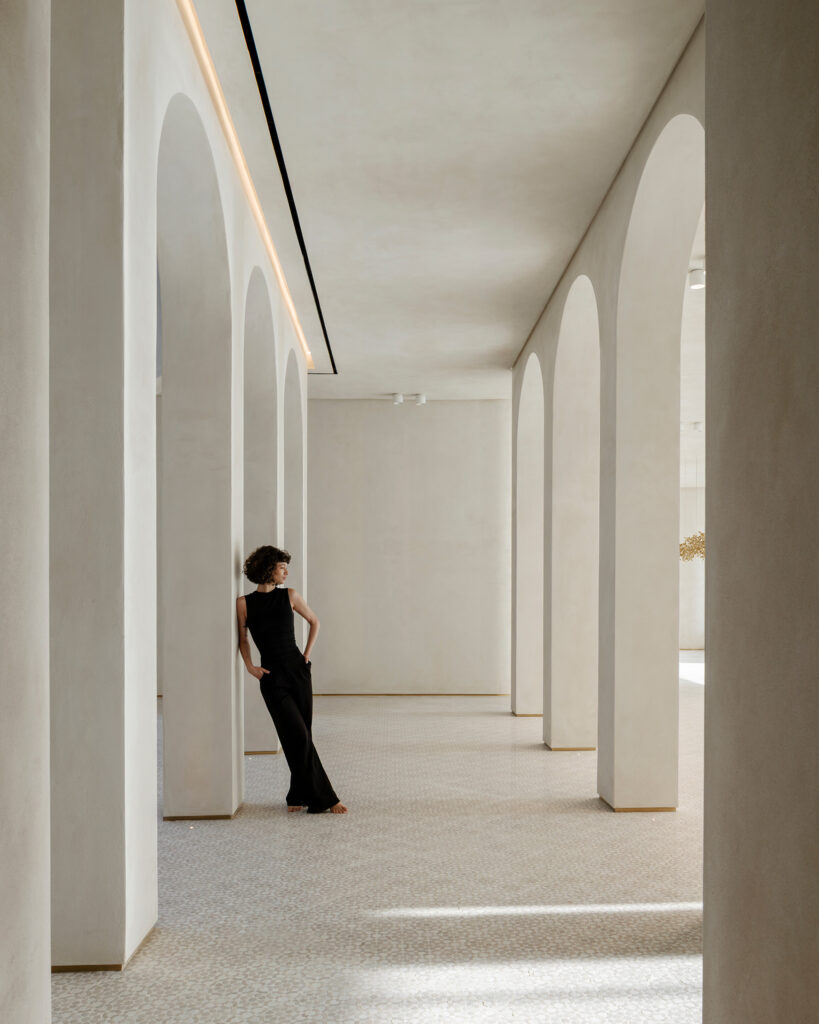
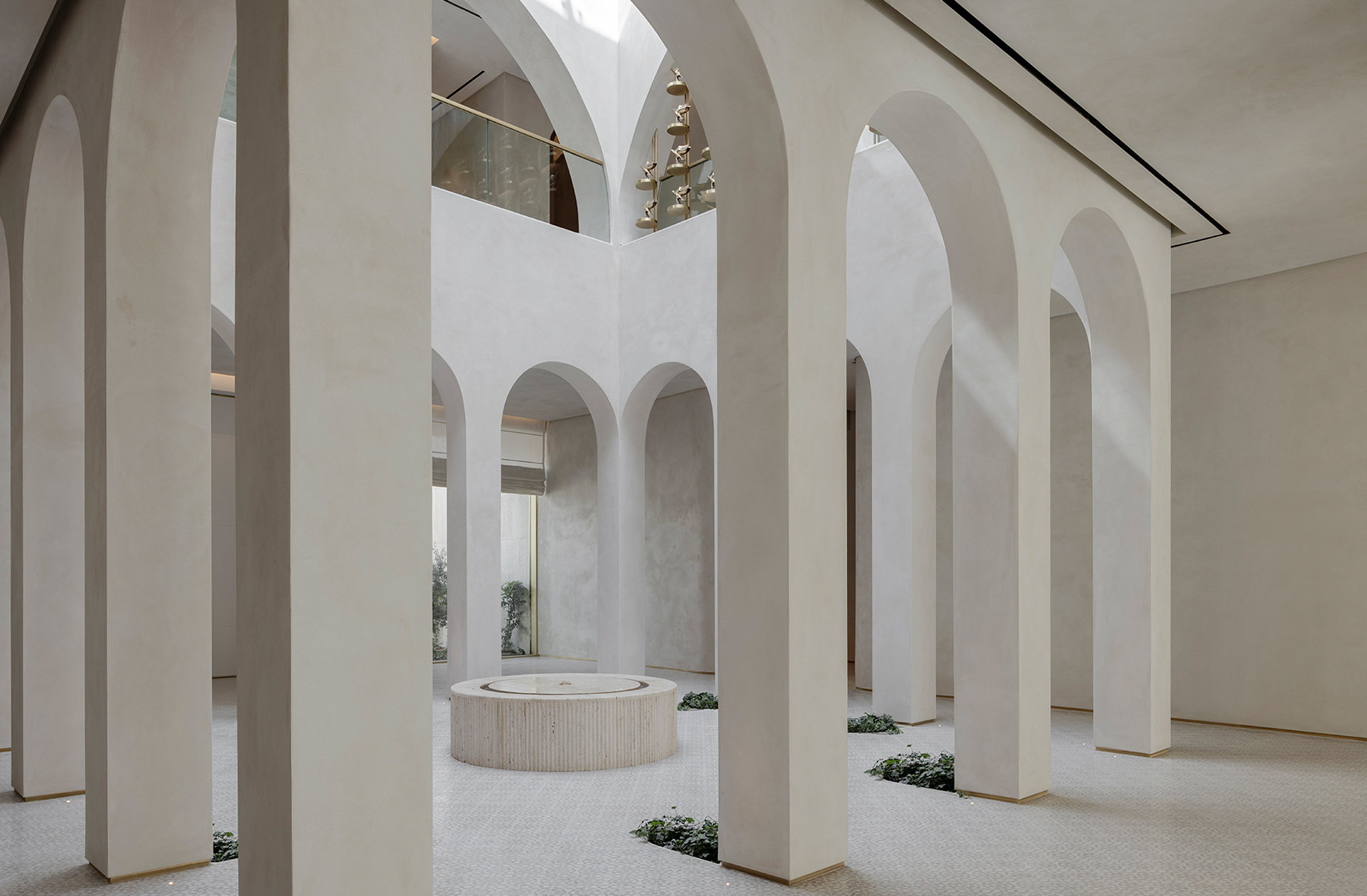
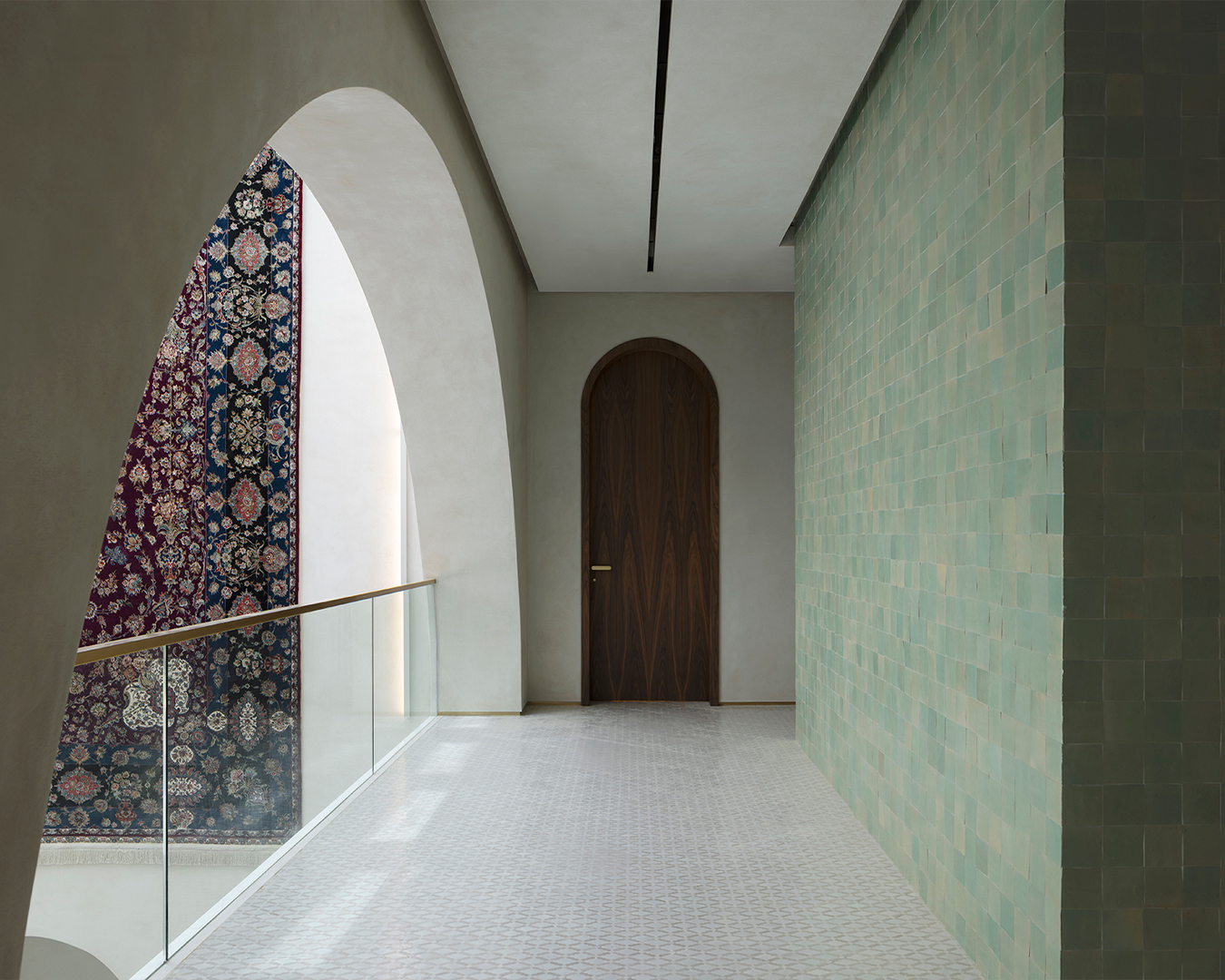
The design draws on traditional Arabic architecture through a contemporary lens. At its heart, a central atrium draws daylight deep into the house, with a travertine fountain recalling the cooling traditions of Arabian courtyards. The liwan, or central hall, creates a generous threshold between interior and exterior, connecting the living spaces to a pool through monumental arched doors. Throughout the villa, recurring motifs of columns, arches and handcrafted Moroccan tiles elevate transitional spaces into striking architectural experiences, balancing monumentality with moments of intimacy. Despite the deliberately restrained use of windows, a feeling of lightness and connection to nature comes through the use of our naturally pigmented clay plaster, applied at scale.
For this month’s journal, we speak to Alicia Cambra, Design Director of Cambra Buró, about designing in response to climate, the interplay between monumentality and intimacy, and why sustainability, beauty and wellbeing should be inseparable ambitions.
Cambra Buró works across interiors, architecture and landscape design, as well as a range of sectors. What are the common threads or principles that connect these varied projects?
‘I think what connects all our projects is the way we understand design as a whole. Whether we are working on a private residence, a hotel, a restaurant or a commercial space, our approach is always centred on the human experience and the relationship between people and their surroundings. Of course, each sector has its own particularities, but the common thread is our approach to materiality, spatial quality and the emotions that spaces can generate.
We are interested in how materials perform, how they age, how they feel and how they contribute to the overall atmosphere. Sustainability and innovation are equally important across all sectors. We believe good design should go beyond aesthetics, questioning conventional solutions and exploring new materials and techniques that are more responsible towards the environment.
Ultimately, regardless of the scale or purpose of a project, we want to create spaces that have a strong identity, feel natural to inhabit and remain relevant over time.’
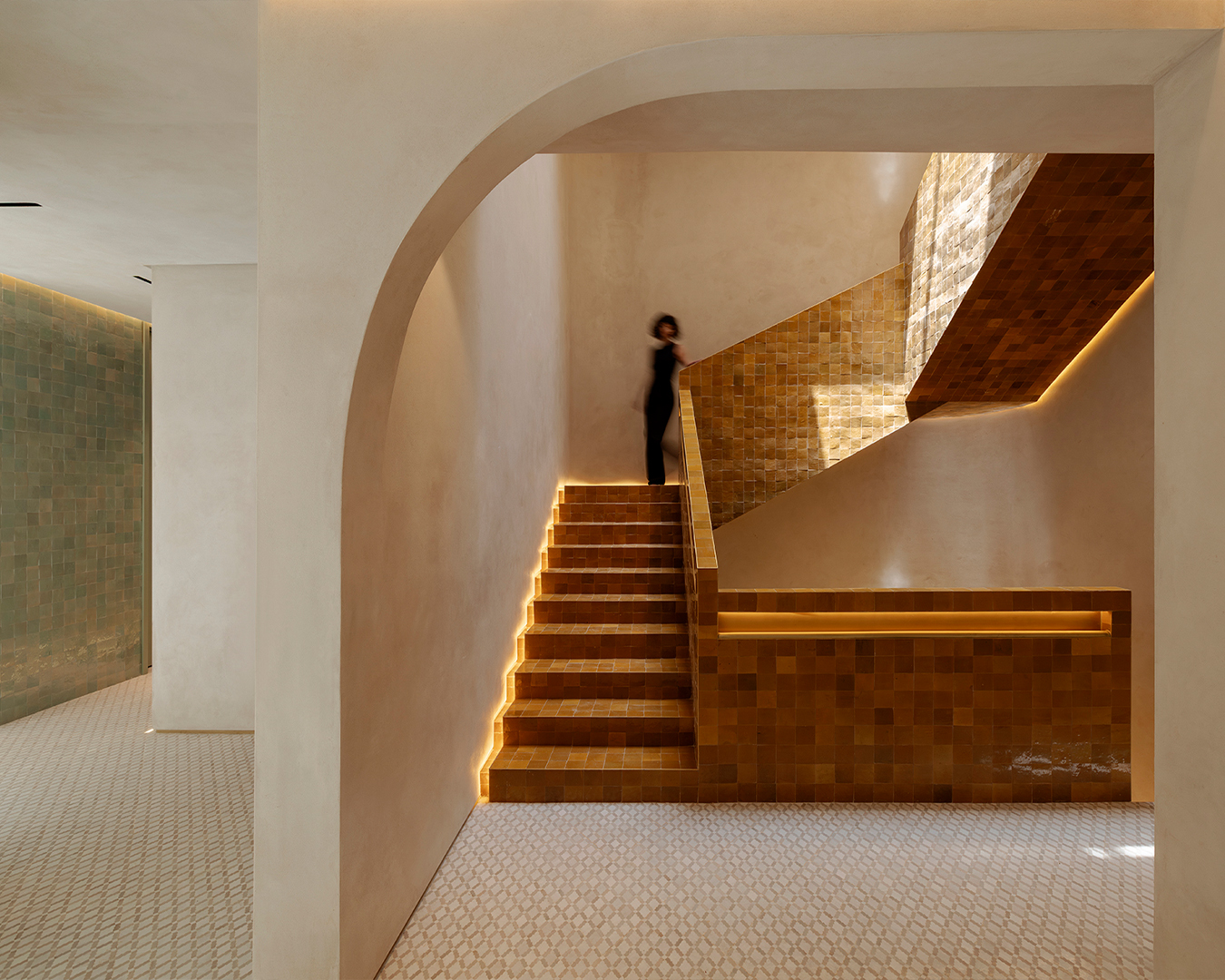
At Plinth House, how did the climate and cultural context of Kuwait influence the design?
‘Plinth House is particularly meaningful to us because it represents many of the principles we want to establish within our practice. Designing in the Middle East means responding to an extreme climate, where heat, solar exposure and energy consumption are major considerations. Rather than seeing these conditions purely as limitations, we approach them as opportunities to rethink how buildings can perform and respond to their environment.
We looked at passive strategies, protected openings, natural light, insulation and the relationship between indoor and outdoor spaces. The architecture responds to the climate through its massing, shaded areas and controlled exposure, while maintaining a strong connection to the landscape. At the same time, we wanted to challenge some of the conventional construction methods used in the region. We have always advocated for sustainability and progress in architecture, and we believe that innovation in materiality is essential to developing construction techniques that are less harmful to the planet.
This is where materials such as natural clay finishes became particularly relevant. Beyond their aesthetic qualities, we were interested in their relationship with wellbeing, indoor air quality and the creation of healthier interior environments.’
Tell us about your approach to materials – what drove your material choices for this project?
‘From the beginning, we wanted Plinth House to be a positive house in every possible sense. Not only in terms of energy consumption, but also in its carbon footprint, its environmental impact and the wellbeing of its occupants. We studied materials from a much broader perspective than their visual appearance. We were interested in their embodied carbon, their composition, their durability and their contribution to the indoor environment.
For instance, we introduced ash-based masonry blocks as an alternative to conventional construction materials, exploring the potential of lower-carbon solutions. We also incorporated natural insulation materials such as cork, alongside clay-based finishes and other carefully selected materials that could help reduce the environmental impact of the building.
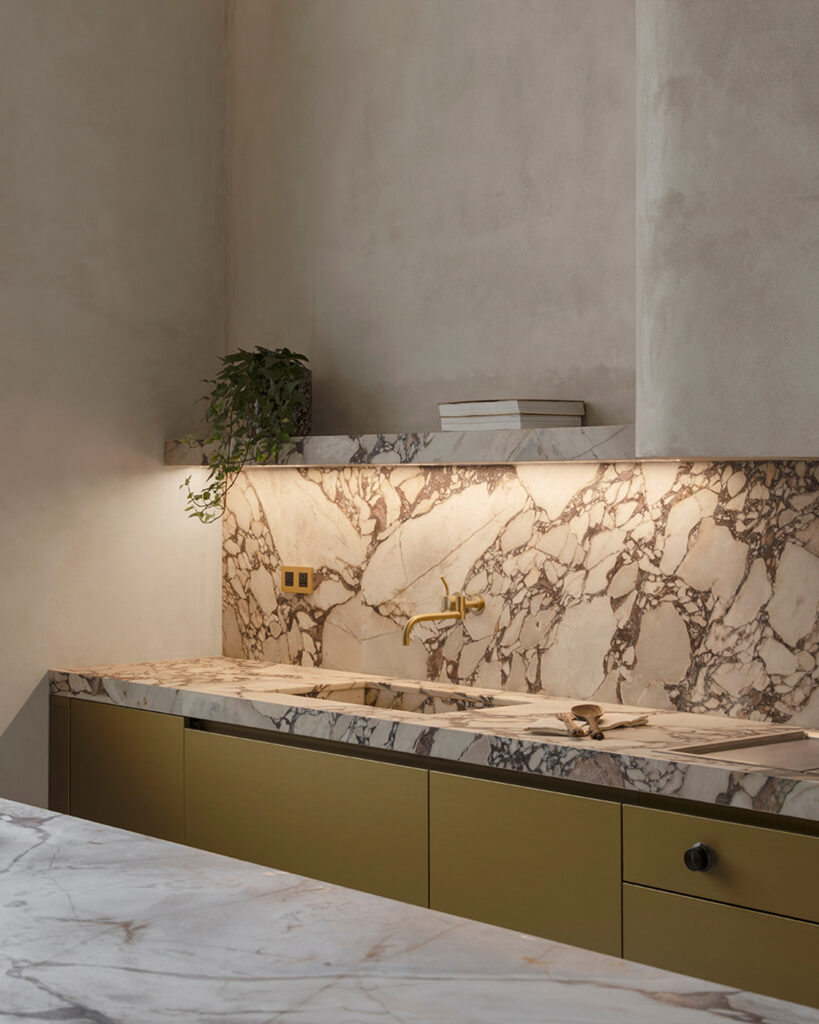
The natural clay finish became one of the defining elements of the interiors. We used it extensively throughout the house because of its beautiful, quiet materiality, but also because of its natural composition and moisture-regulating properties.
One of the things we particularly appreciated about working with Clayworks was the extensive colour palette and the flexibility of their team. They were very open to experimenting with new tones and developing bespoke colours, which gave us the opportunity to work closely with them on colour matching and achieve a very specific material palette throughout the house.
Ultimately, our material choices were driven by the idea that sustainability, beauty and wellbeing should not be separate ambitions. They should work together naturally.’
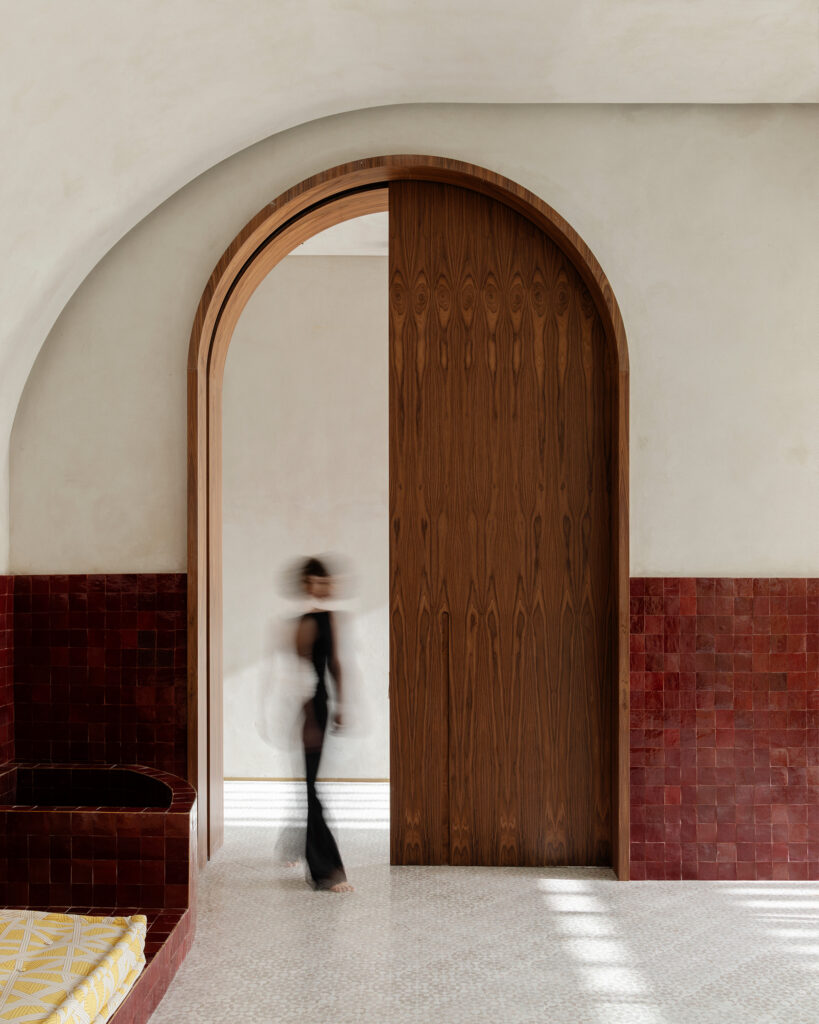
How did you balance monumentality and intimacy within the home?
‘I think the most interesting part of Plinth House is precisely that contrast. Architecturally, the house has a monumental presence. The scale, the proportions, the solidity of the volumes and the natural stone elements create a strong architectural statement. But we didn’t want that monumentality to translate into cold or intimidating interiors. The balance comes largely through materiality. As you move through the house, the monumental architecture is softened by the finishes, the natural light and the tactile quality of the surfaces.
The clay finishes played an important role here. Their subtle texture absorbs and diffuses light in a very gentle way, bringing warmth and a sense of calm to spaces that are otherwise quite grand in scale. We wanted the interior to feel warm, light and silent. Not silent in a literal sense, but visually quiet, where materials have the space to express themselves without competing for attention.
For me, that is where the balance happens. The architecture can be powerful and monumental, while the experience of living within it remains intimate, comfortable and deeply human.’
Photography by Tooze Studio
View the Clayworks case study on Plinth House here.