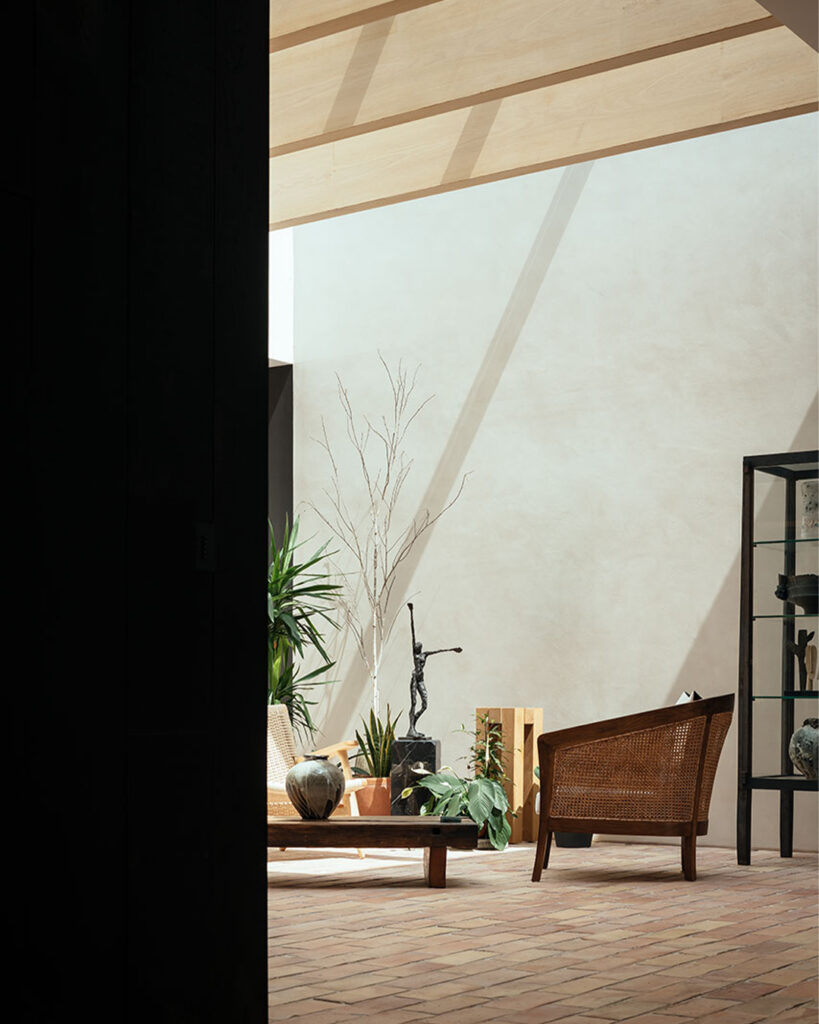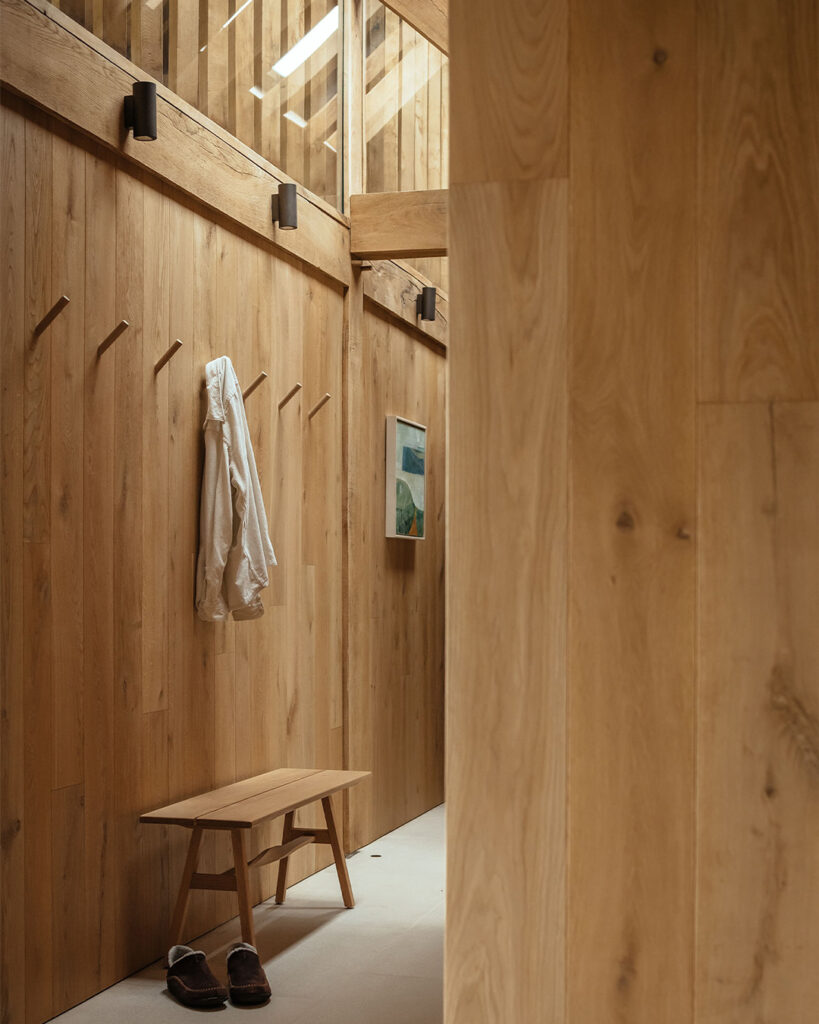
McLean Quinlan has built a reputation over more than four decades for beautiful homes that sensitively respond to their surroundings. Here, Matt Alagiah speaks with the architecture studio’s three directors – Fiona McLean, Kate Quinlan and Alastair Bowden – about sustainability, timeless design, and how to ensure a building stays rooted in the landscape.
For the architecture practice McLean Quinlan, building to last is always a primary objective. “That’s the test,” says Kate Quinlan, one of the studio’s directors. “Is this going to age well? Is it going to date? Is this a trend decision or an eternal decision?” Building sustainably and choosing materials that will age gracefully are central to their approach – but just as important is designing spaces that feel truly timeless. As co-founder Fiona McLean says, with a degree of pride: “I think it would be hard to date many of our projects.”
The studio is a family affair. Fiona set it up in the 1970s, with her then-partner and a mutual friend, before she took over the firm alone. Over the subsequent years, she built a reputation for thoughtfully designed homes, mainly refurbishments, until in the mid-2000s, Fiona’s daughter Kate and Kate’s husband Alastair Bowden joined the practice and became directors. Today, McLean Quinlan is a 14-person studio split between Winchester and London.
In recent years, McLean Quinlan has been at the forefront of sustainable architecture and building practices. The studio was an early adopter of Passivhaus principles, for instance, which aim to create highly energy-efficient buildings through, among other things, high-performance windows and insulation. “We latched onto [these principles] because they just made sense,” says Alastair. “You follow the rules and end up with a really good building.”
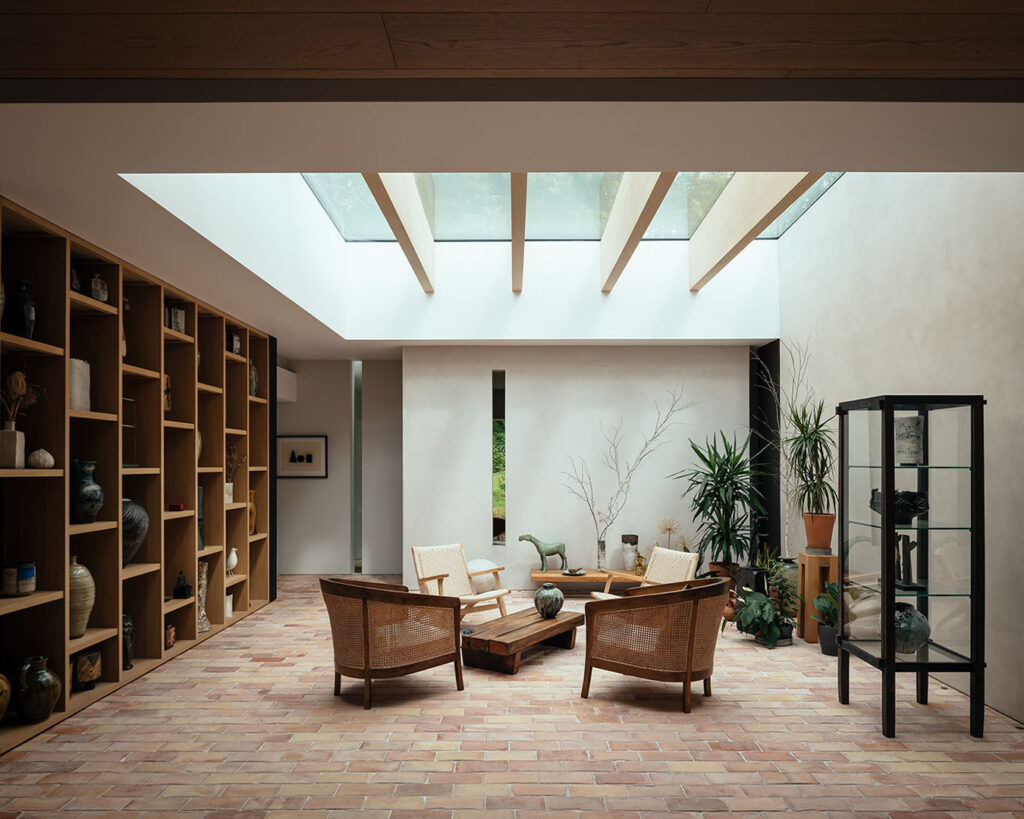
The studio’s Devon Passivhaus is a great example of these principles in action. However, Alastair says, sustainable materials and building practices have already advanced a lot since that was completed in 2018. Downland Barns, a timber-framed family home nestled in the North Downs, was completed in 2023 and takes sustainability and energy efficiency a step further, with the inclusion of elements such as a mechanical heat recovery system, Tesla batteries, and a rainwater harvesting system.
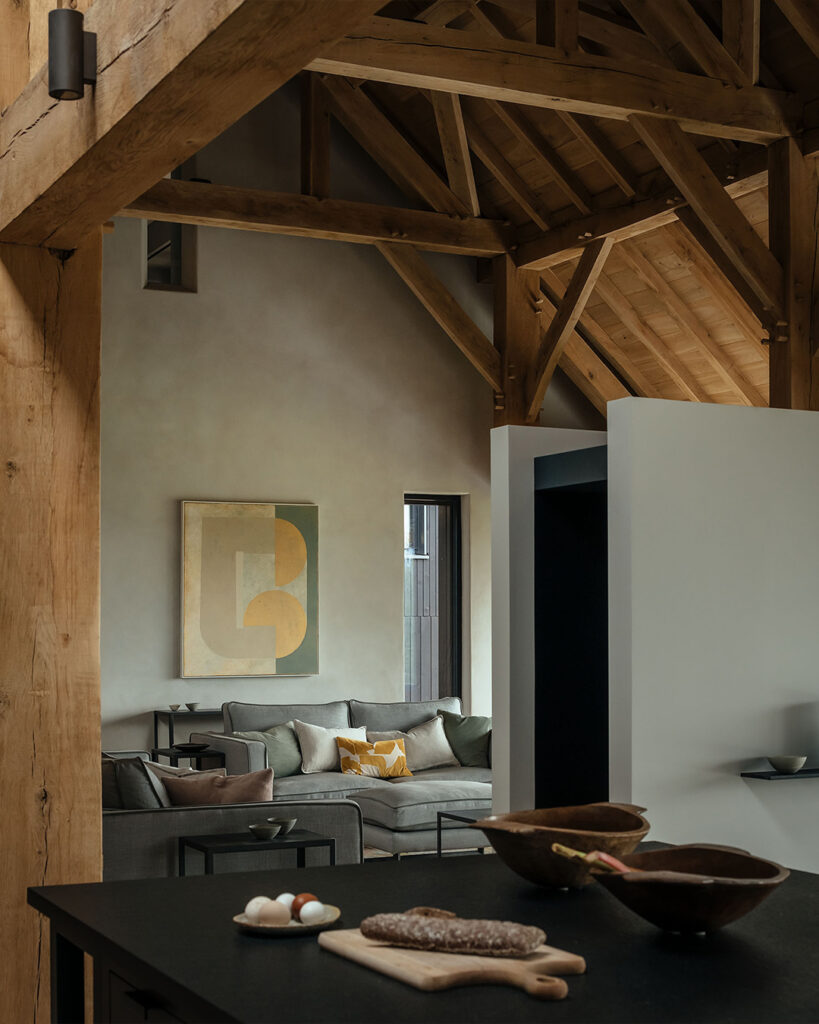
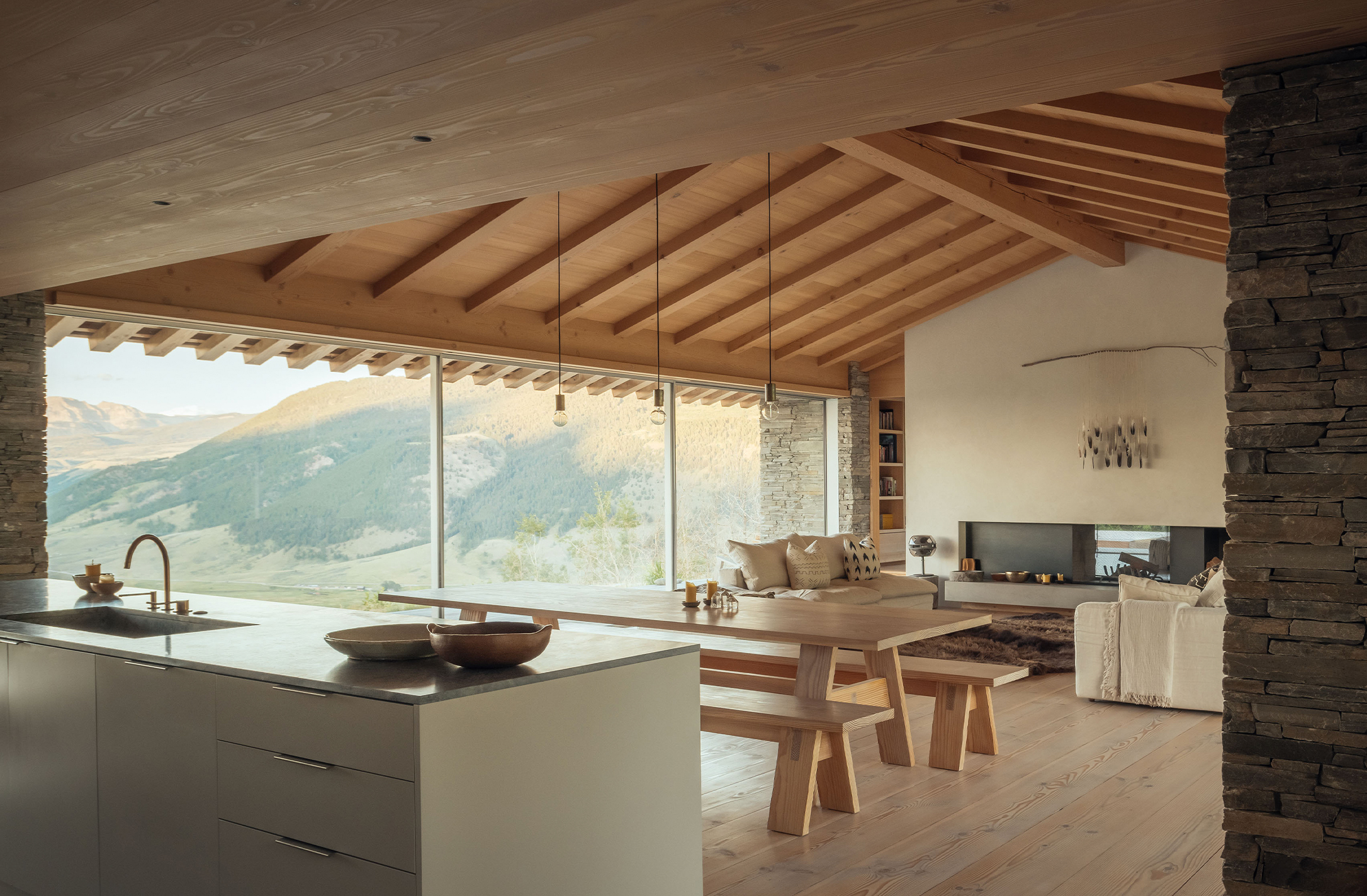
While McLean Quinlan tries to reduce a home’s environmental footprint, the studio also aims to limit the impact on its surroundings. This is perhaps most obvious in a project that took the studio far from its UK base – a contemporary home in the mountains of the US state of Wyoming, which was completed in 2016. The extensive use of stone and timber throughout both the exterior and interior make the residence feel connected to its extraordinary setting. “It’s a particular landscape,” says Fiona. “You couldn’t really build that house anywhere else.”
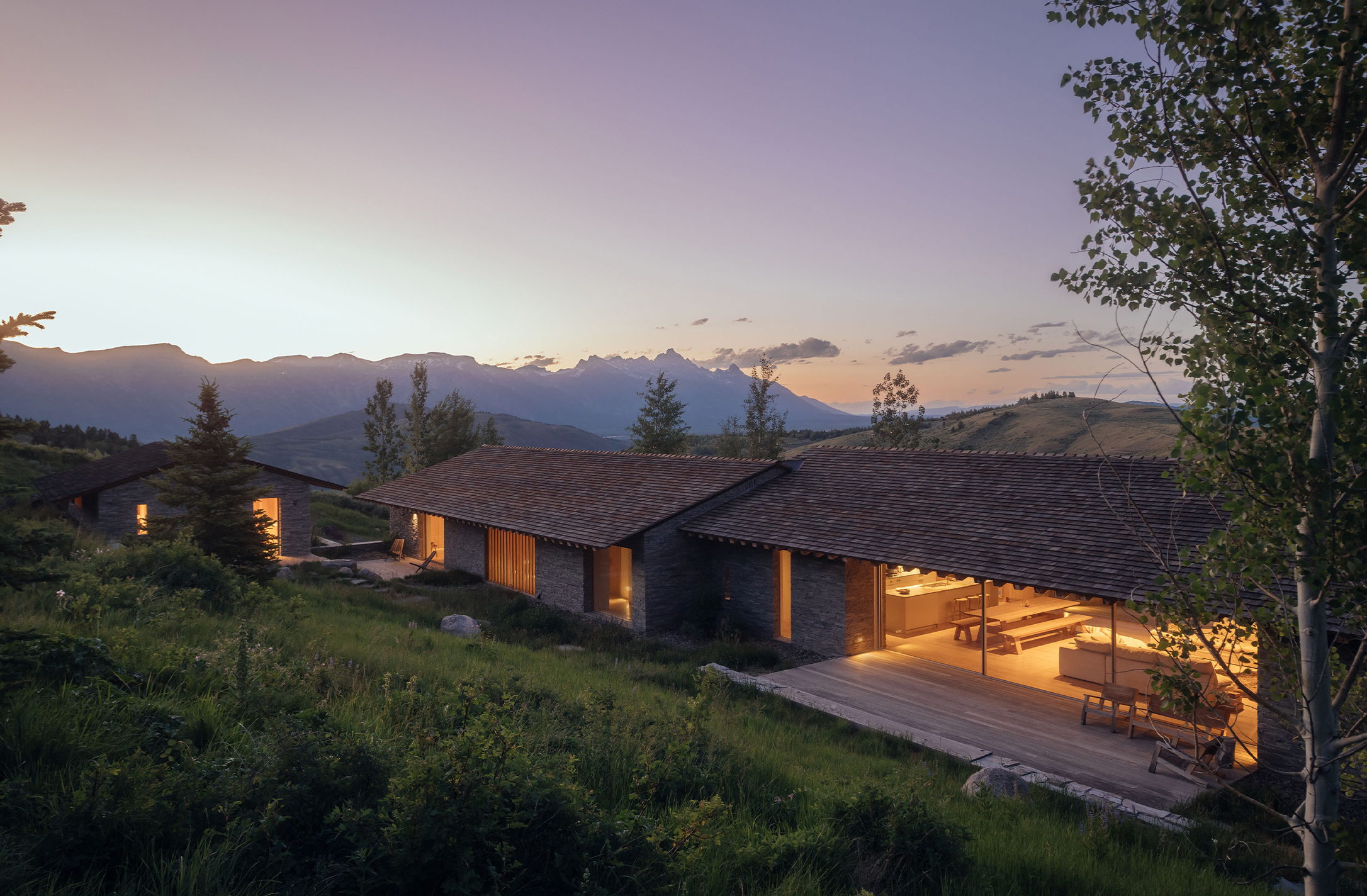
According to Kate, the studio’s approach to vernacular is to find “what’s beautiful” around any given site. “If you take stone from the area, you’re rooting it to where it is,” she adds. The challenge is in finding an equilibrium between vernacular styles and materials on the one hand, and contemporary living habits on the other. “People like bright, open spaces and lots of glazing, so how do you marry that with a cottage feel, because cottages don’t have big windows?” she continues. “It’s about balancing the traditional elements that people feel drawn to, with making sure it’s a space for people to live.”
Having started out working on a range of refurbishment projects, Fiona also has a keen understanding of how buildings, and particular materials, age. “Seeing how buildings can rot and not fare well over time, at the back of my mind is always making sure that our details are robust,” she says. This isn’t simply about aesthetics, but also sustainability and waste. “If it’s low-carbon but doesn’t last long and you’ve got to rebuild it, the sums don’t really work.”
The McLean Quinlan team are, therefore, very careful about the materials they work with. “Some of the modern detailing isn’t as tried and tested over time,” says Fiona. This is one of the other benefits of using environmentally friendly materials, according to Alastair. “Low-carbon materials are generally simpler and more timeless,” he says, adding that companies like Clayworks produce materials that “make a connection to buildings of the past, but they can be used in very contemporary ways.”
They’re constantly on the lookout for materials that age gracefully and acquire a depth of personality as they wear. For Kate, wooden floorboards are the best example of this. They go through an “awkward teenage phase,” as she puts it, when they have a few scratches and scuffs, but when they’re more thoroughly aged, they’re “charming and beautiful”.
The practice was recently commissioned to return to a family house in Ealing, one of Fiona’s earliest projects, to work on a second refurbishment. “The family were adamant that the house worked,” says Alastair. “They didn’t want to completely gut it, it was just about bringing it up to today’s standards.” Looking around the house this time, Kate found a small timber key box that had been put in as part of Fiona’s first refurb. It became, for her, a symbol of the power of timeless design. “It was a lovely piece of joinery,” she notes, “and it had this wonderful patina, that life of being used.”