A new generation of landowners are reimagining what it means to steward the land, to nurture and restore the landscape, and creating hospitality experiences with a deeper purpose at their heart. Following in the footsteps of Knepp Wildland, the pioneering lowland rewilding project in West Sussex, Denton Reserve in North Yorkshire represents the next evolution of this movement – a landscape restoration project of national significance, woven together with regenerative food production and an impressive vision of rural, luxury hospitality and wellness.
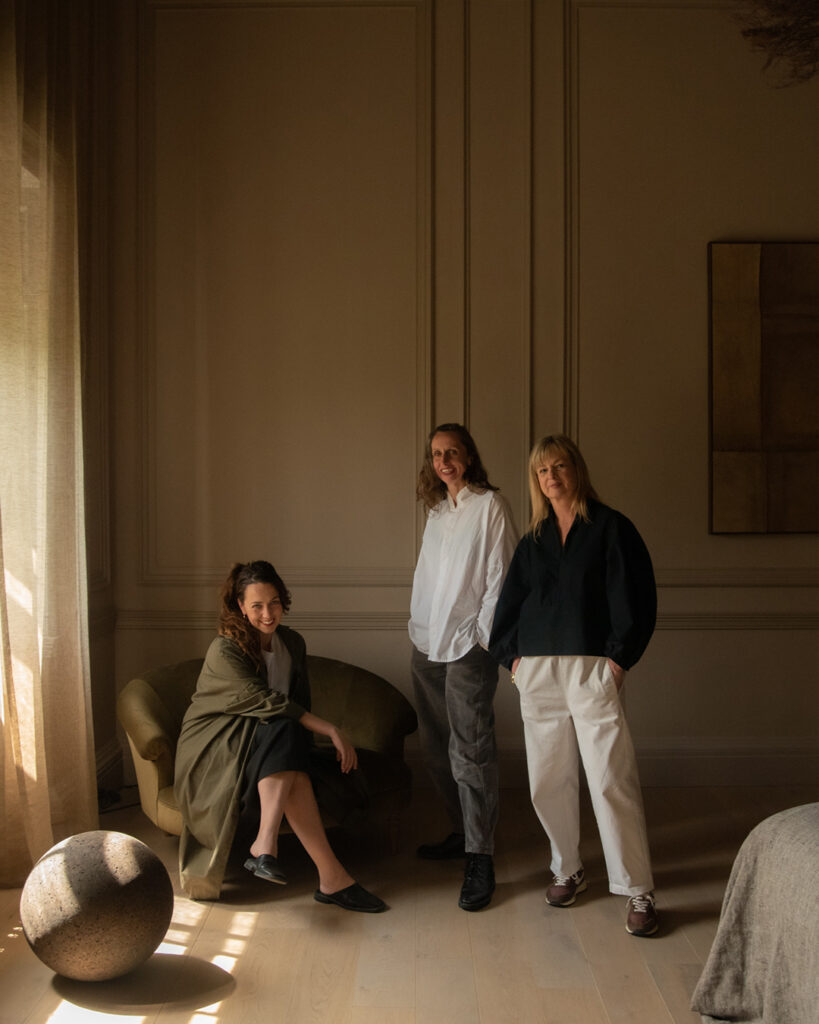
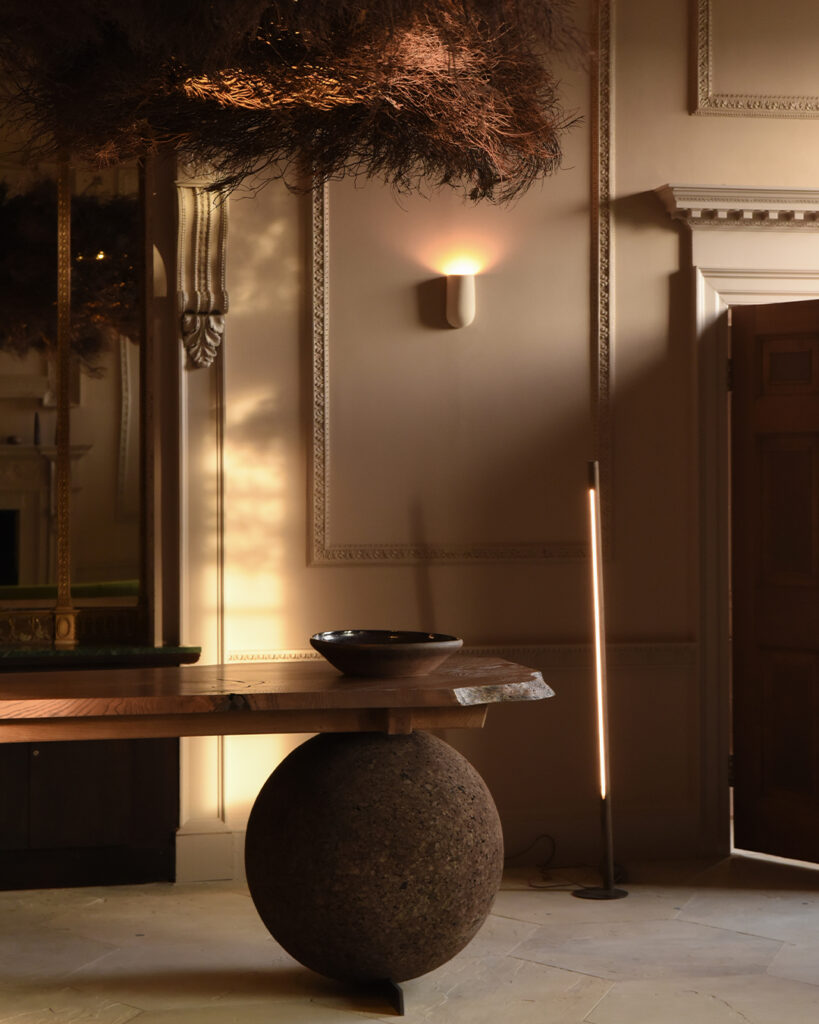
Tasked with redesigning the interiors of Denton Hall, a Grade I listed Georgian country house at the heart of the Reserve were Lou Davies, Caroline Hunter and Lucy Franks of BOX 9 – a multidisciplinary studio spanning architecture, interiors, furniture design, styling and photography. Founded in 2007 on a desire to seek the most elegant, refined and restrained design solution, each project carries a deep sensitivity to texture, tone and proportion. The practice also collaborates with exceptional craftspeople, and nowhere is this more evident than at Denton Reserve. As part of the restoration and reimagining of Denton Hall, BOX 9 worked with Sussex-based woodworker Ted Jefferis to create a monumental reception table, carved from a 269-year-old storm-fallen oak collected and cared for by one of the Reserve’s owners. Directly above, a large-scale light, woven by basketmakers Studio Amos from heather harvested by hand on Denton Moor, comes into its own as the centerpiece of this grand entrance.
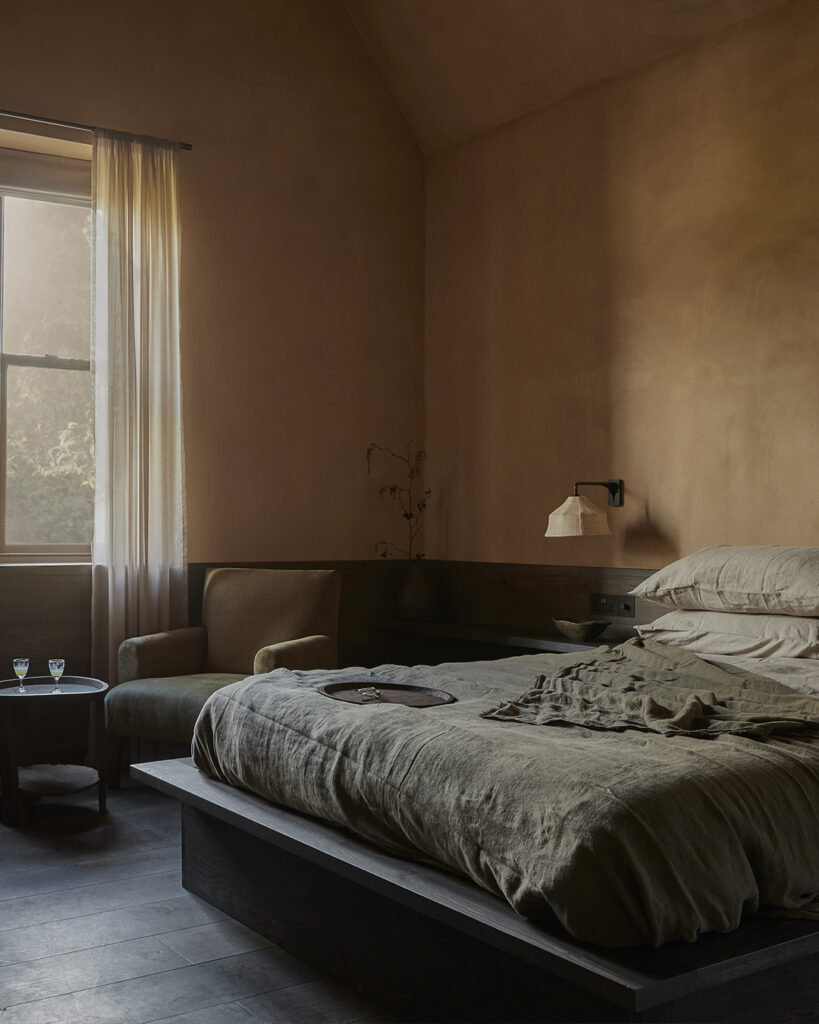
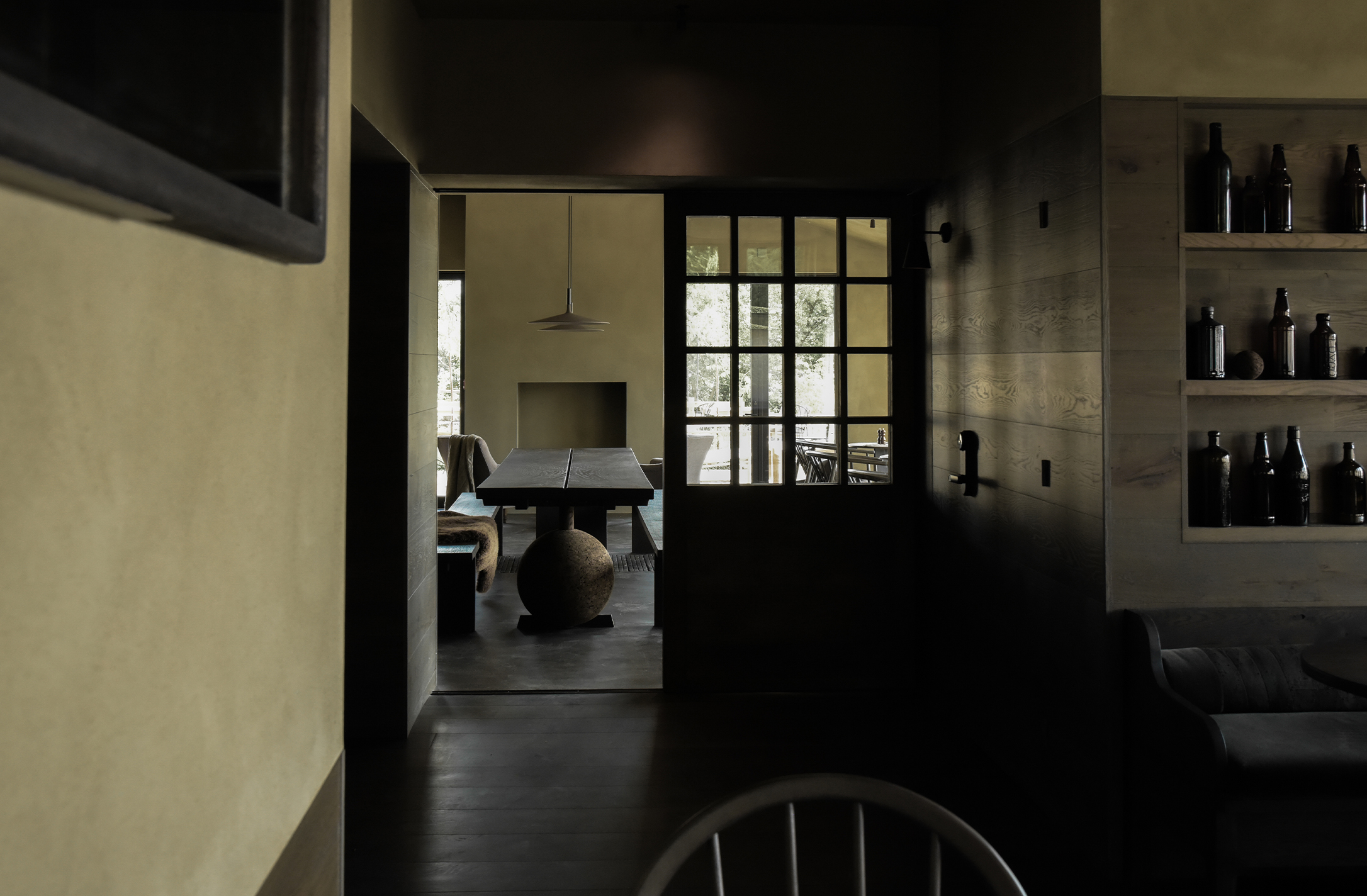
About 2 miles down the road, The Penny Bun, a Yorkshire-gritstone country inn tucked away in the quaint village of Askwith, was the first Reserve property to be reinvented by BOX 9. Though part of the Reserve, it has its own unique identity – a natural material palette of earthy browns, muted greens and wheat tones ground the interiors in the natural beauty of the surrounding Yorkshire landscape. Our clay plaster was chosen as a key material throughout, ensuring a seamless flow from the communal inn to the crafted guest bedrooms, whilst supporting the project’s commitment to wellbeing and sustainability.
In this conversation, the trio reflect on their holistic design philosophy, their commitment to circularity and carbon-conscious practice, and how material choices from handcrafted furniture to breathable, natural wall finishes can contribute to spaces that restore more than they take.
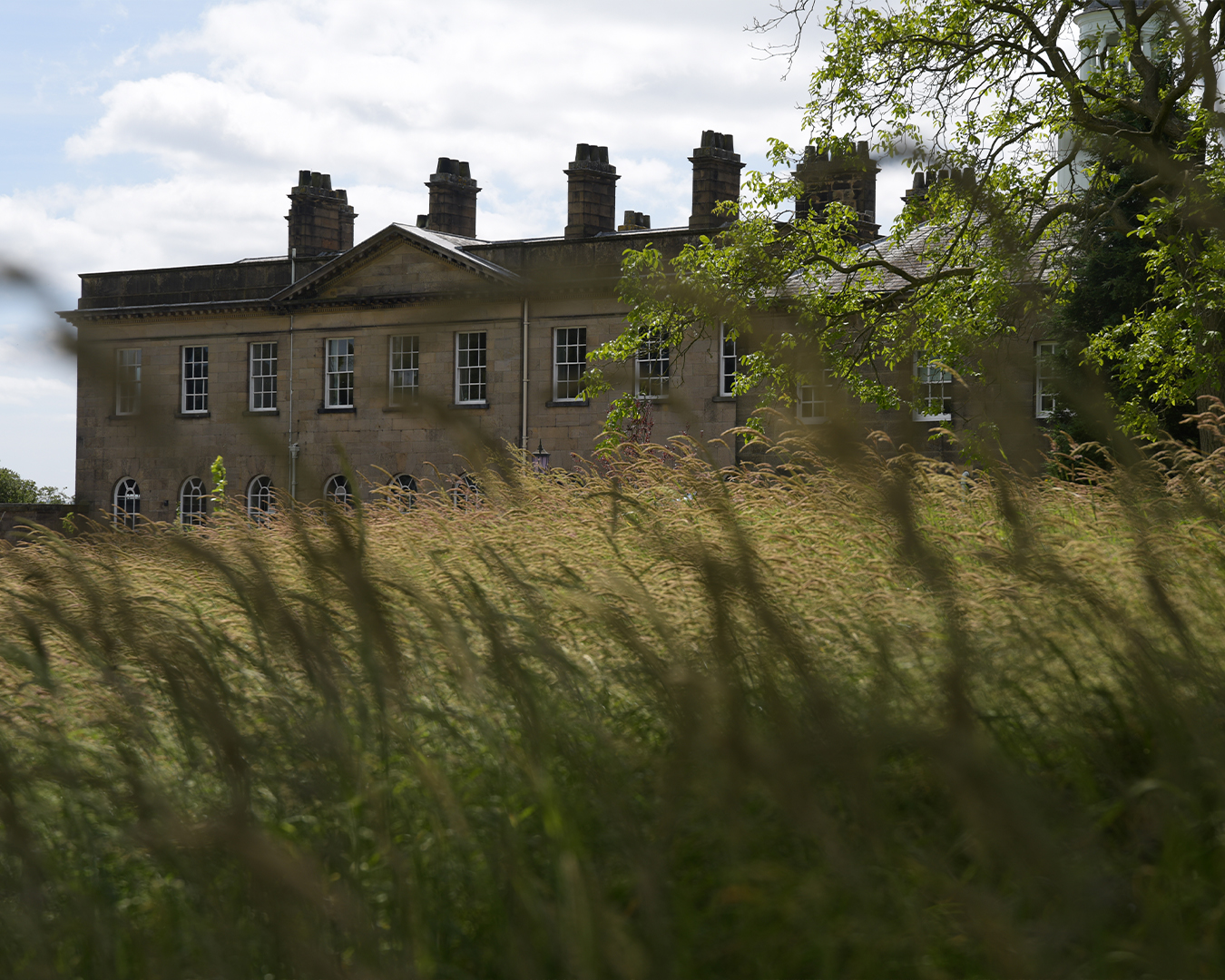
When you first visited the Hall and The Penny Bun at Denton Reserve, what struck you about the buildings and their atmosphere? How did the existing character of each site shape your response to the brief?
‘The Hall had an extraordinary sense of scale and stillness – the proportions are grand, yet what stayed with us most was the integrity of the original architecture: the light, the history, and the landscape it sits within. That immediately shaped our response: to quieten the spaces, strip back visual noise, and let the building breathe – so the experience becomes about presence, pause and a deeper connection to the beauty beyond the windows.
The Penny Bun was the opposite in scale but equally rich in character – familiar, grounded, and deeply local. It already held the essence of a village inn: warmth, intimacy and a feeling of being gently held. Our role was to refine and reframe it as a modern, intentional escape without polishing away its honesty. That existing atmosphere led us towards tactile, hardworking materials, generous comfort, and a palette drawn directly from the surrounding land – so it feels both new and timeless, but unmistakably Yorkshire.’
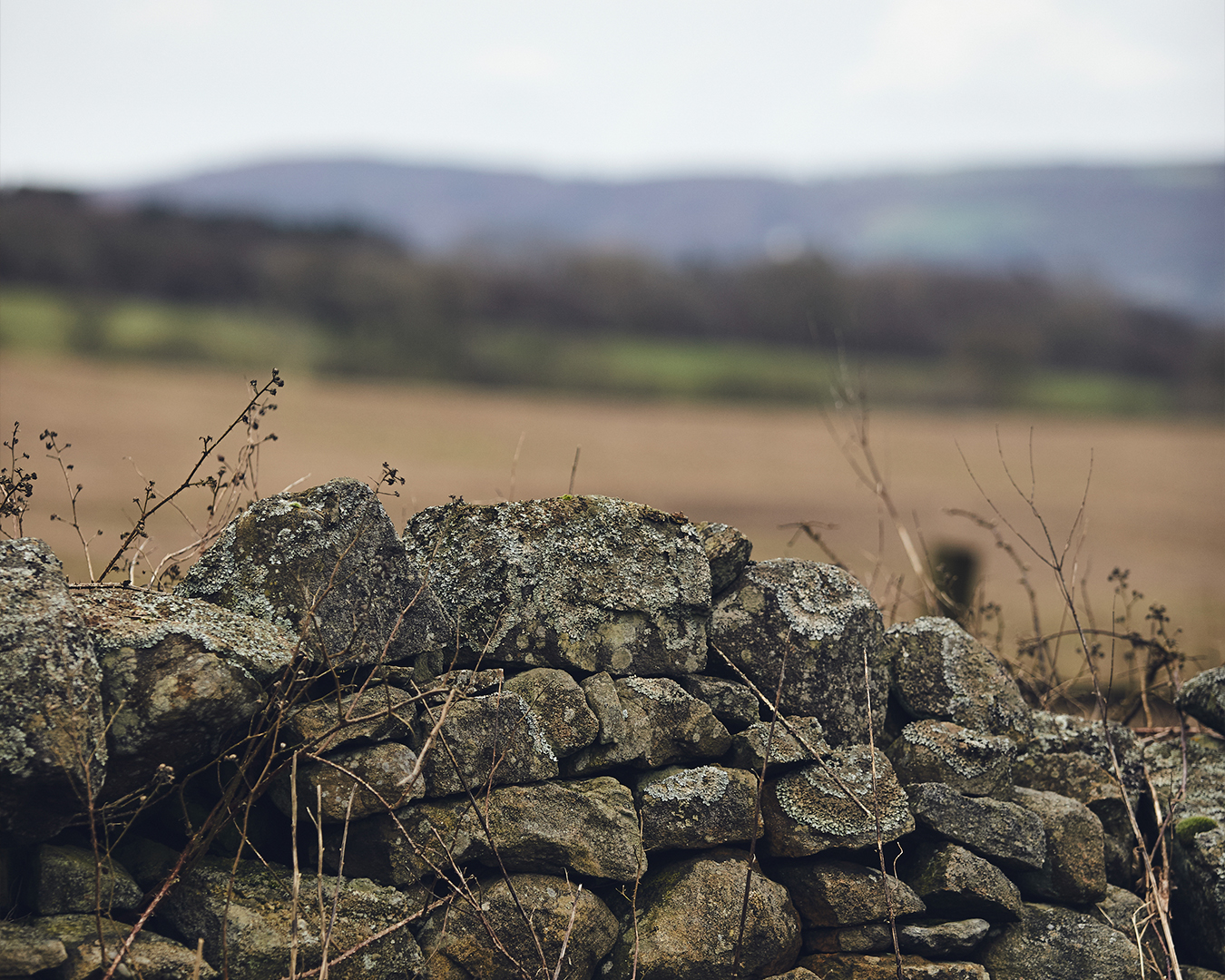
How did you approach environmental responsibility and carbon capture in your work at Denton Reserve?
‘At Denton, environmental responsibility isn’t an afterthought – it’s the foundation of the entire reserve, and it shaped every decision we made. We started with a simple principle: keep what can be kept, repair what can be repaired, and only allow things in the door when they earn their place through longevity, circularity and meaning.
In practice, that meant prioritising natural, reclaimed, and waste-derived materials; working with makers who share those values; and designing in a way that reduces future replacement and waste. We were conscious of carbon in two directions: operational performance – improving comfort and efficiency, and a more embodied carbon approach – re-use first, low-impact finishes and careful specification.
Carbon capture is the wider mission of the estate – through land management, biodiversity and regenerative food production – and our role is to ensure the buildings support that ecosystem: quieter, longer-lasting, and aligned with the land’s recovery.’
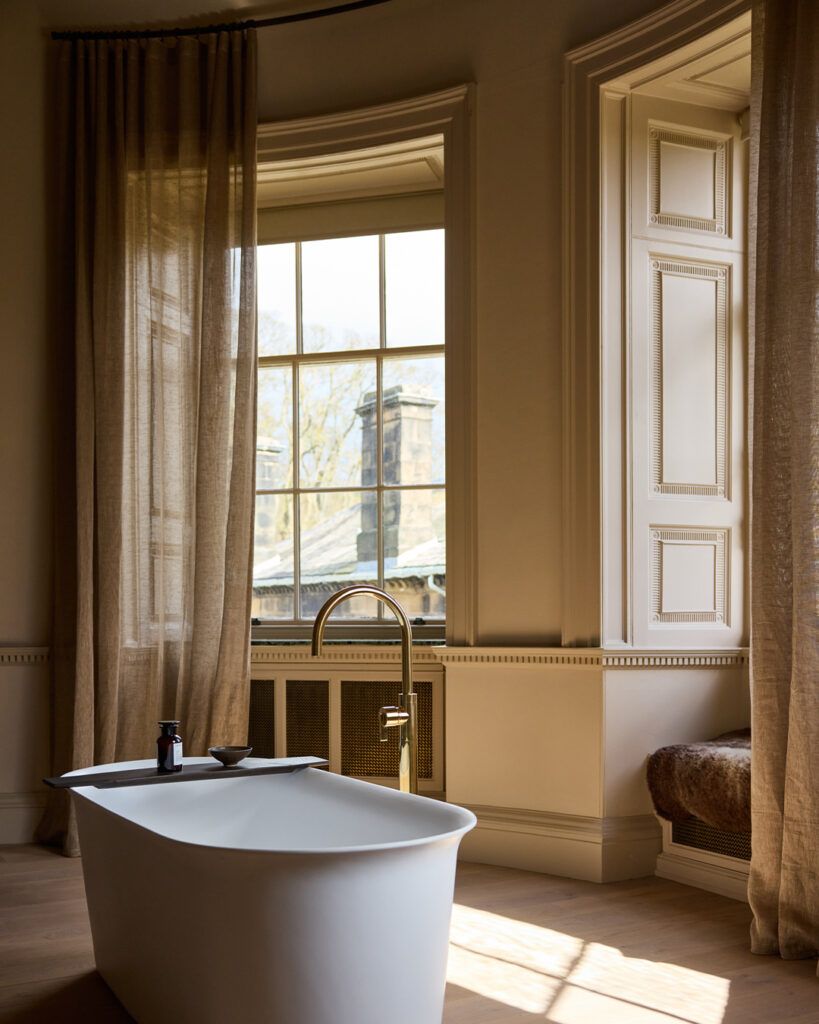
BOX 9 is a truly multi-disciplinary studio. Can you tell us more about your furniture design practice – how it began and how it integrates with your architectural work?
‘Furniture design began very naturally for us – as an extension of architecture rather than a separate discipline. When you’re working with buildings that have strong character, you often need pieces that respond precisely to proportion, viewpoint and use: a table that anchors a room without interrupting sightlines, a desk placed to frame a view, a reception piece that feels like part of the narrative rather than an ‘imported’ object.
Over our many years in this industry it’s become one of our most direct ways to express craft, material storytelling and circular thinking. It allows us to collaborate closely with makers, test materials – to resolve details at a human scale. We often use rescued, surplus or waste materials from projects to reduce what’s discarded and give those materials a second life.
That work has now evolved into our first furniture collection, Collection 9 – nine pieces we’ve obsessively developed and perfected alongside our closest artisan collaborators. We’re preparing to launch later this year, and look forward to sharing more soon.’
You’re currently creating a new space for your practice in Sussex. What can you share about this project?
‘We’re thinking of the Sussex project as more than a studio – it’s a long-term home for the practice, and a working space that supports how we actually design. It will be a retreat-like base for the three of us, three women and dear friends – who do our best work when we’re in the same room, surrounded by materials, prototypes and process. Alongside desks and meeting space, it will hold a materials and prototype library: the samples, objects and in-progress pieces that help us properly test ideas and keep the work grounded in making.
We also hope it becomes a local base for fellow creatives – a place to gather, celebrate and demonstrate craft, and to share skills and process in a way that feels generous and collaborative. Importantly, we’re designing it as a place where our friends, customers, collaborators and guests can come and stay – a space that can be hired, lived in, and experienced first-hand, so the materials and the atmosphere aren’t just discussed, but felt.
The ambition is for it to feel calm, functional and light-filled, rooted in the same values we bring to our projects: longevity, low-impact choices and deep respect for materials.
In parallel, we’re working towards a small central London base in the form of a BERTS cabin – a compact space to gather and showcase our sustainable cabins in the city. Together, the London cabin and Sussex studio will work in harmony: one an accessible meeting and showcase space, the other a quieter retreat and showroom for our furniture collection.’
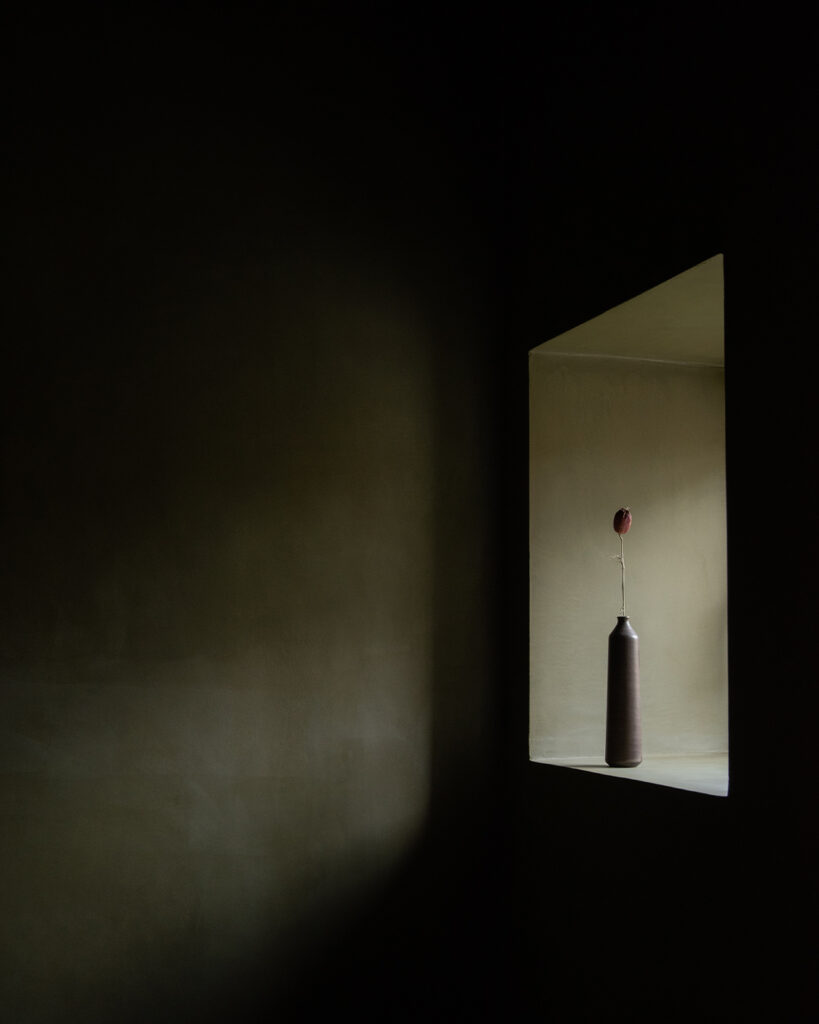
Your projects often use earthy, natural colours and materials, and you’re not afraid to use darker tones. What draws you to these moodier colours, and how do they influence the way a space feels – both emotionally and physically?
‘We’re drawn to colours that feel inherent to a place, taking cues from the surrounding landscape – tones that come from raw materials and the way things weather over time. Darker, earthier palettes can create an immediate sense of shelter and calm; they absorb light rather than bounce it, which softens a room and changes the pace of how you experience it. In hospitality especially, that can be deeply restorative – it encourages you to slow down, settle and exhale.
Moodier colours also allow material texture to do more of the talking. Clay, timber grain, stone, limewash – they read richer and more tactile when the palette is restrained and slightly deeper.’
What are the markers of a successful project to you?
‘A successful project supports how people live, move and gather – and it continues to feel quietly confident and enduring over time.
For us, it also has to be conceptually true and collaborative: a clear idea that reflects the values of the wider vision, delivered through a process carried out in harmony with the client, the makers and suppliers, and the spirit of the building itself.
On a more technical level, a successful project is one that has been properly resolved before it reaches site – where the thinking is rigorous, the details are disciplined and the build process becomes something we can genuinely enjoy: time to refine, test and pore over every junction.
Success for us is measured by impact. We want every project to leave something positive behind – for the landscape, for the craftspeople involved, and for the people who will inhabit the space. If it restores more than it takes, and deepens someone’s sense of connection – to place, to others, and to themselves then we feel we have done our job.’
Photography by Lucy Franks, Sean Knott and Jake Eastham.
View the Clayworks case study on The Penny Bun here.