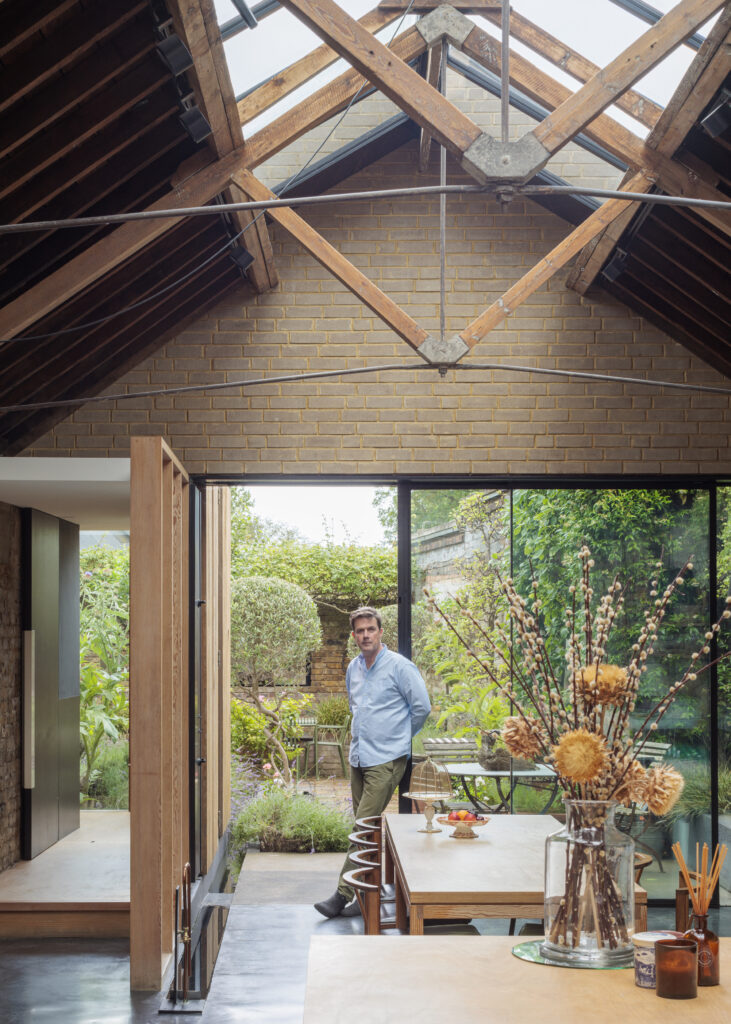
Introducing the first chapter of our Clayworks journal collaboration series. In conversation with Jonathan Tuckey, Harriet Thorpe interrogates the vital role of artisanal craft and employing the use of natural materials in his designs that look towards a more considered architecture landscape.
Ever since British architect Jonathan Tuckey founded his architecture studio nearly 25 years ago, crafted natural materials have guided every design, with timber, stone, clay bricks and clay tiles forming his essential palette. Rather than learned, he believes this decision has been somewhat innate, rooted in a very human desire to work with materials that share our experience of being alive – revealing their character, age and experiences through layers of rings, fossils or patination, just like we gather scars and wrinkles, arguably becoming more beautiful with the wisdom of time. Just like us, natural materials are ‘perfectly imperfect’, he says.
Whether a Devon church conversion, an industrial Berlin hotel or a Swiss farmhouse, Tuckey’s earliest enquiry for any design is to the local forests and quarries, the colours of the earth and the tonalities of the vernacular architecture, finessing his palette with local species and flavours, anchoring a building to its landscape. For example, while oak is essential to his British palette, in Switzerland the forests are rich with birch, larch, pine and Douglas fir. “Using oak there would be strange,” he says, “like having a glass of ouzo in London.”
While Tuckey certainly subscribes to the environmental benefits of using natural materials, it’s his emotional response to them that has firstly driven his pursuit. “For me, nothing manmade produces that visceral feeling of belonging,” he explains – a connection only strengthened by the alchemy of artisanal craft, unlocking function and poetry through a smooth, intuitive touch or a visually warm aesthetic.
“This symbiosis and resonance between humans and nature is ultimately what makes a space welcoming to inhabit. If you walk into a room that resembles the set of 2001: A Space Odyssey, as a human you feel like you’re in the way. Whereas if you walk into a space handmade out of natural materials, you feel part of it. We shouldn’t feel like we are disrupting a space, we should feel like we are contributing to it.”
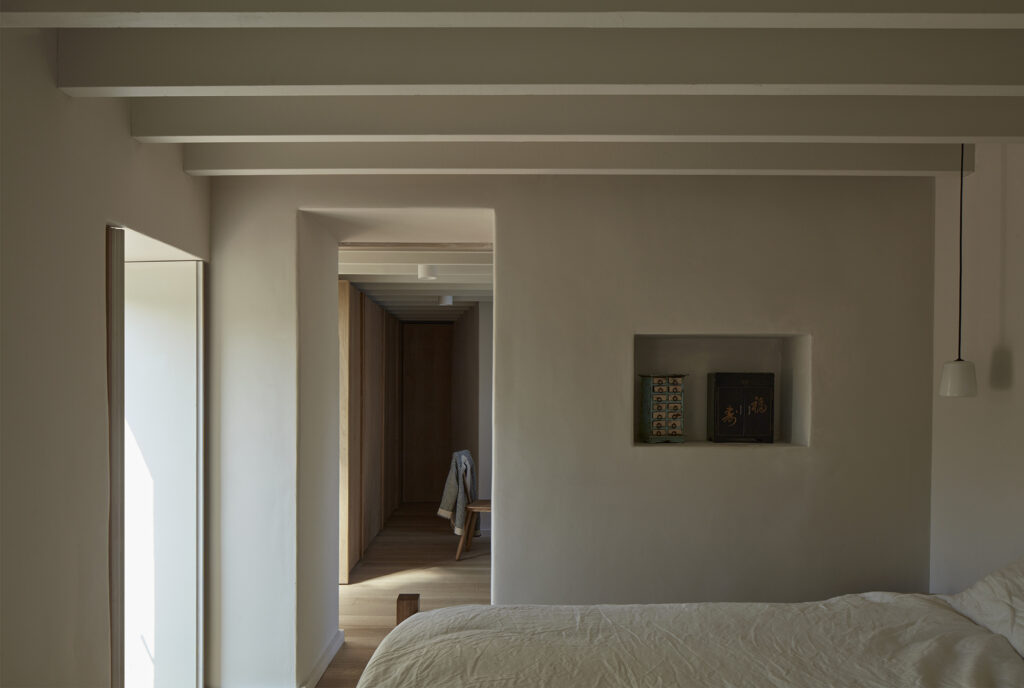
He deeply and instinctively senses the benefits of natural materials to our health and wellbeing. In describing the atmosphere of a recent farmhouse restoration in Austria designed with untreated stone pine, chosen for its resinous aroma, clay plasters and mineral based paints, he lands on the feeling of ‘softness’. “The air felt soft,” he says, “breathing felt clean and calm. The environment allows you to daydream and process thoughts, like when you’re walking in a forest.”
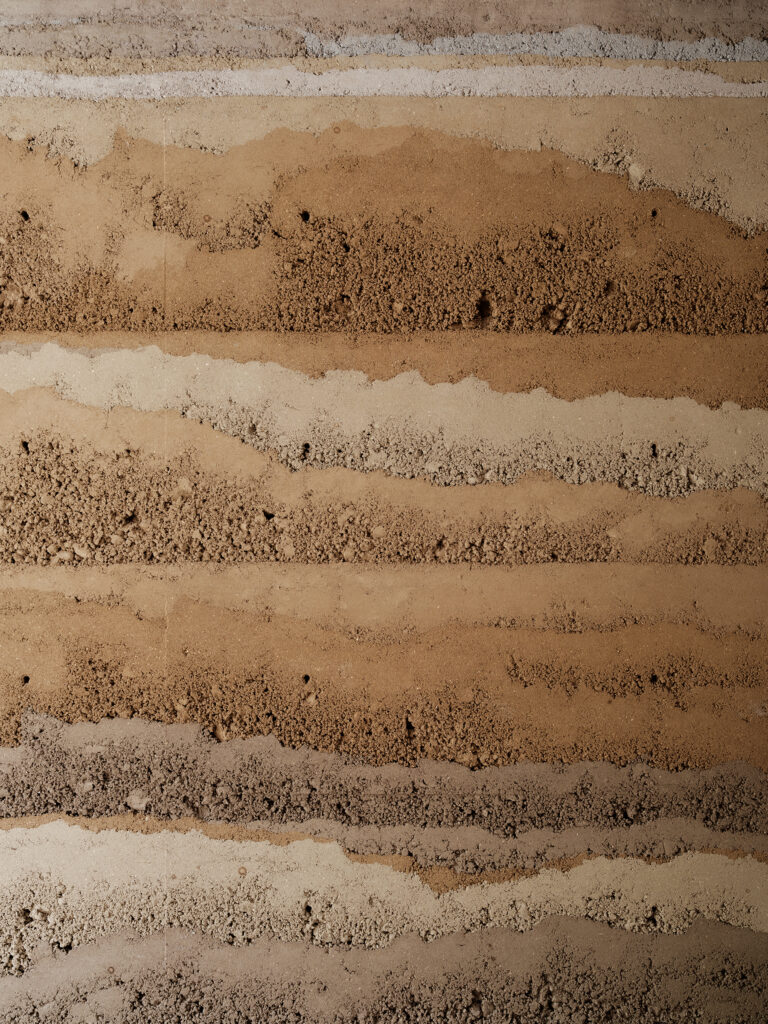
There’s a similar effect at Tuckey’s latest house design built of rammed earth in Wiltshire. Thick, exposed interior walls form a dense and cocooning atmosphere of stratified layers of clay; a softly scalloped timber staircase spirals up through a thick cylinder of earth creating an immersive and transformative daily journey. The walls have been built from the land beneath the house in a slow process imbued with the energy of hands and bodies, a quality that Tuckey connects back to the Arts and Crafts movement and the philosophies of William Morris and John Ruskin.
Currently experiencing a revival, this ancient technique of rammed earth – used at the Alhambra, Japanese Imperial palaces and farms in the West Country – has interested him since studying architecture, yet he never had the opportunity to use it, until discovering this clay rich site on a former brickworks. A ramshackle arrangement of 19th century out-buildings were demolished for aggregate and no cement was added to the mix, meaning the process was zero carbon and material stays fully circular.
This process captures how Tuckey’s interest in natural materials is about looking back into history as well as looking forwards to innovation. The studio seeks out old books full of forgotten knowledge – one published in 1919 displays detailed drawings of cob buildings, another illustrates Norwegian tree bark waterproofing that has informed their work using waste cork from the wine-making industry in Piedmont.
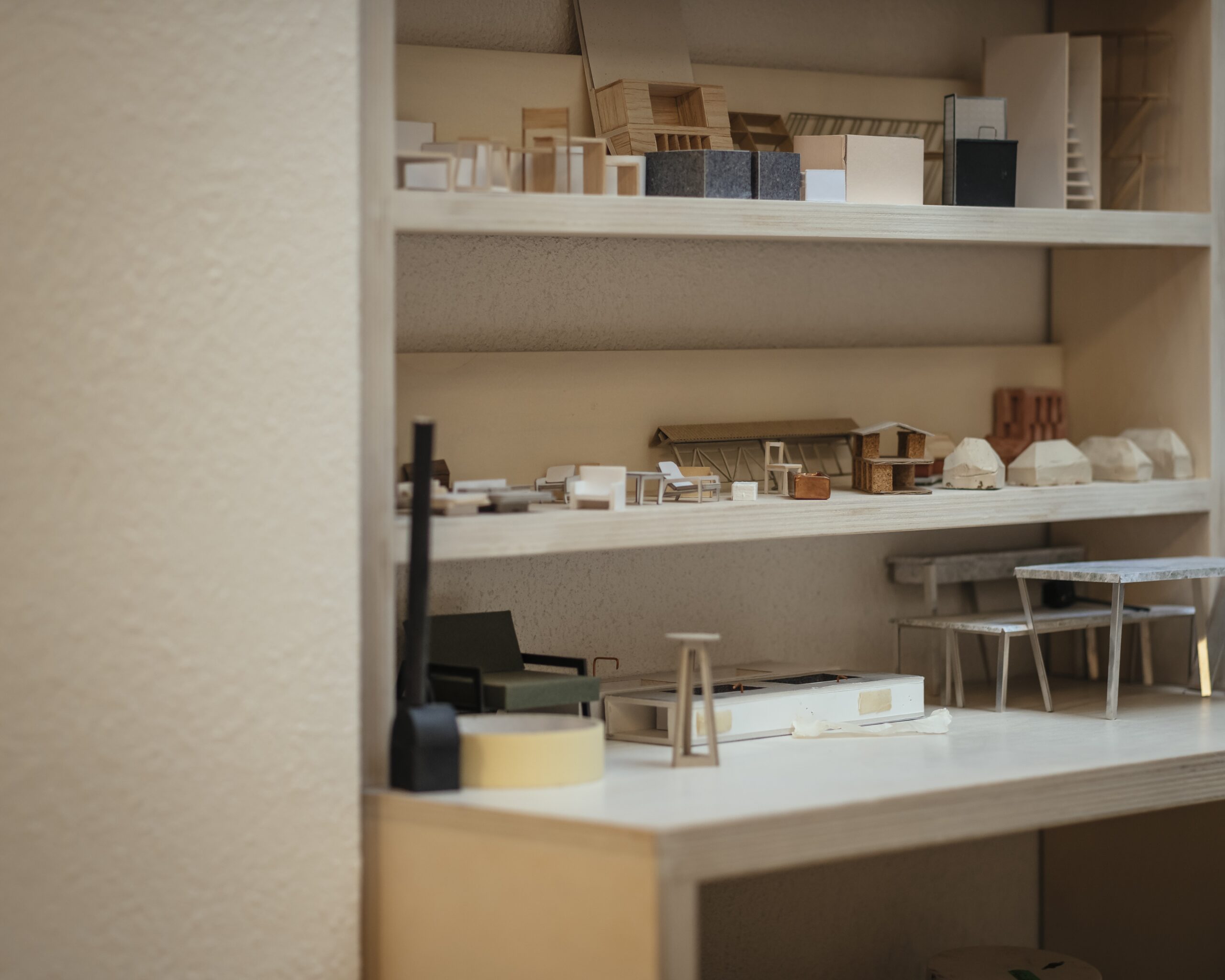
It’s an active and collaborative enquiry, within which the studio’s role is to research and learn about the skills of local specialists and design their work into architecture. He’s fascinating by the growing eco-system of entrepreneurship around the use and re-use of natural materials in design that was ‘rare 20 years ago’, enabling the studio’s use of techniques such as ‘cocciopesto’ terrazzo made of broken terracotta tiles, specialist clay plasters with Clayworks or straw blocks ‘strocks’ for a new farm building in Sussex.
While there is plenty of excitement and optimism in the field, he believes that an open and honest education about these materials still needs to happen, especially as many of us operate largely in an edited, image-based world. “Natural materials are more expensive, they do require specialist skills and there’s no ‘time-machine sealant’ that you can apply to preserve them – but they are infinitely more beautiful,” he says, comparing a natural interior surface to a seasoned leather jacket, softened and moulded to the body, layered with stories and memories of life well-lived.
Images courtesy of Tuckey Design Studio by Jim Stephenson, Dirk Lindner and James Brittain.