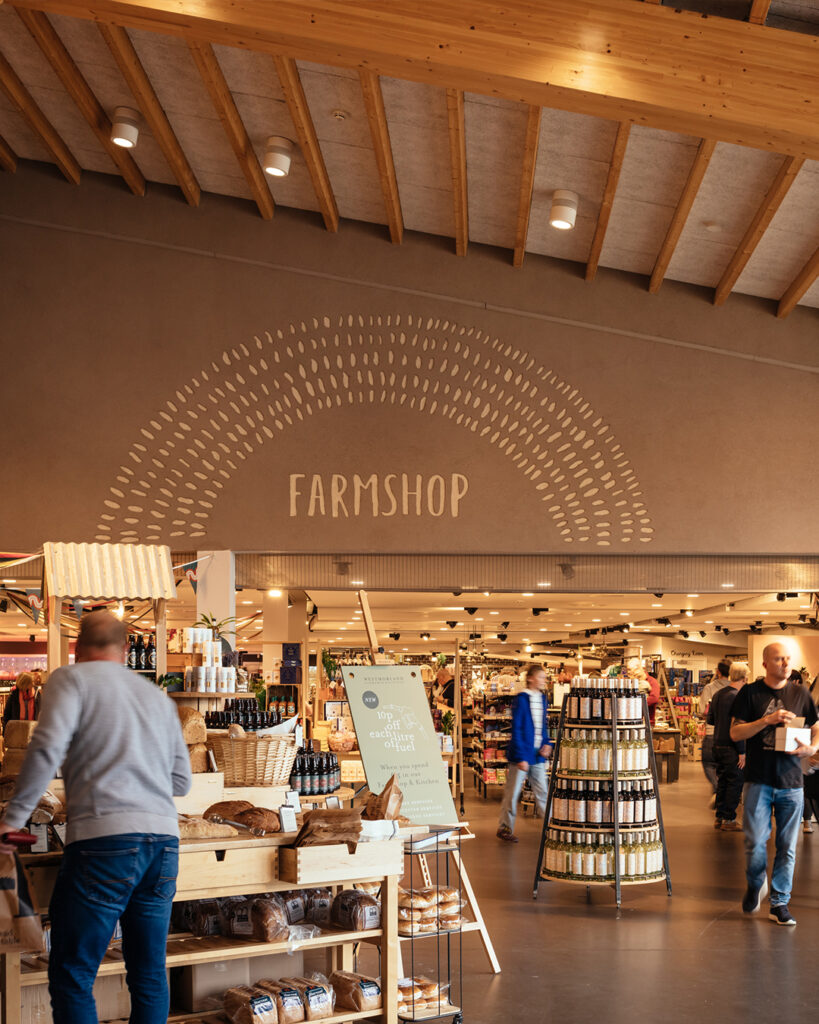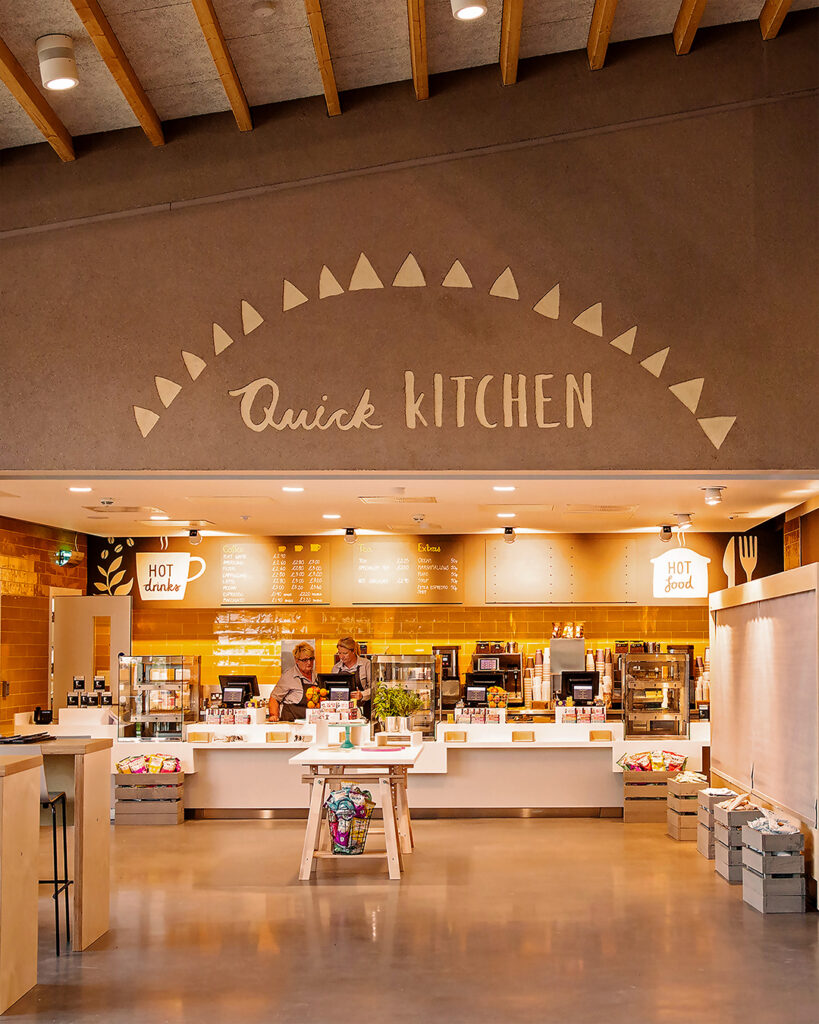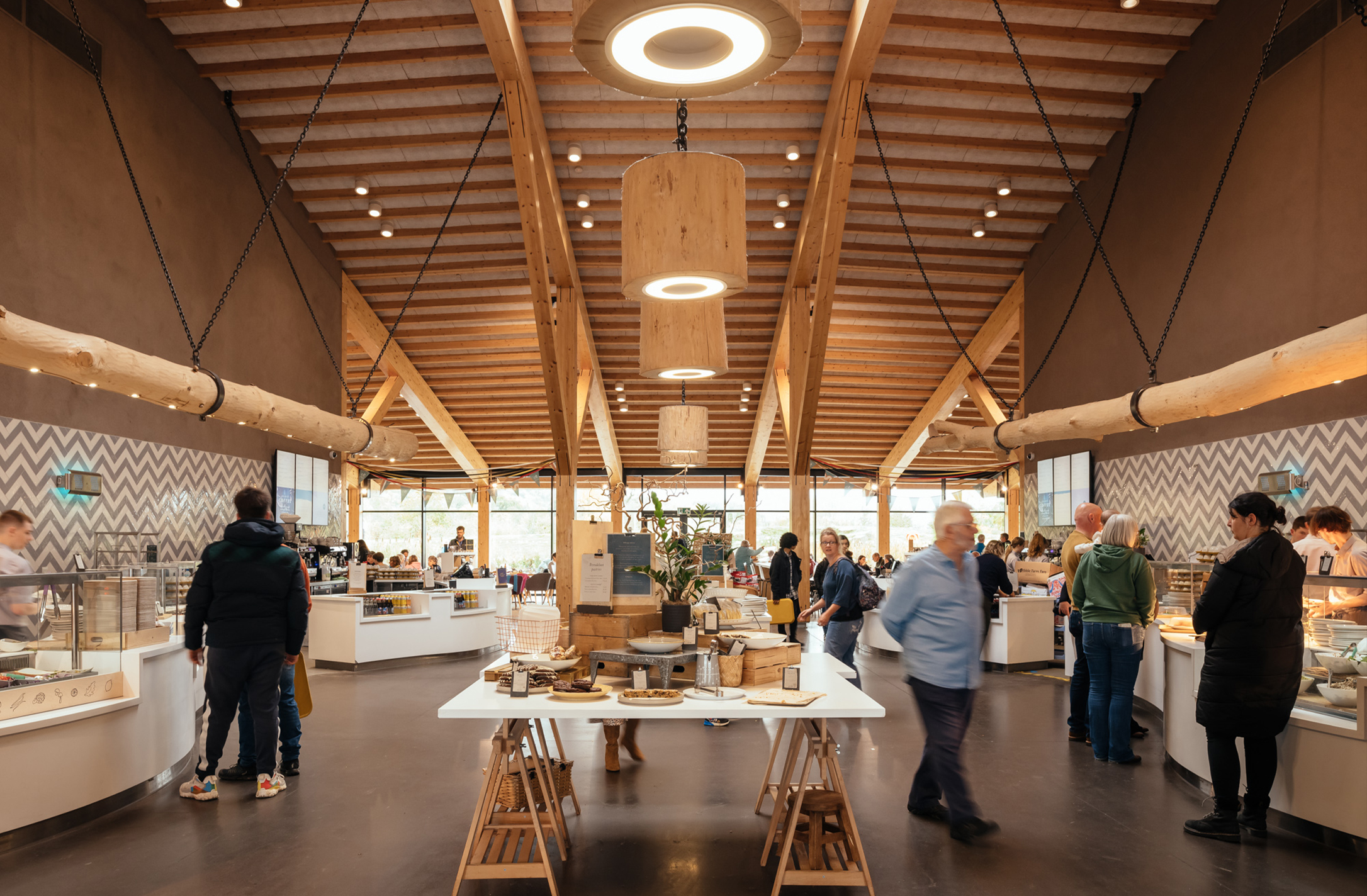
Tebay and Gloucester Services are two unexpected delights in the UK’s motorway infrastructure. Situated on the M6 and M5 respectively, they operate more as farm shops and kitchens than conventional motorway service stations. Gloucester Services, in particular, was conceived to enhance and promote its location and communities, thanks to a partnership between Westmorland Family and Gloucester Gateway Trust – a local charity that invests its skills and financial resources into residents and organisations based predominately in social housing communities in Gloucestershire.
Founded in 1972 by John and Barbara Dunning as an extension of their Cumbrian hill farm, Tebay redefined what motorway infrastructure could be – rooted in place, local food and community benefit. When Gloucester Services opened in 2014, it took those same principles into a far more complex and sensitive context, embedded within the rolling Cotswold landscape. The site flanks an Area of Outstanding Natural Beauty, and the project was subject to the scrutiny of Highways England, specialist interest groups and a judicial review. The response was not to minimise ambition, but to deepen it. The project’s architects Howells, alongside landscape consultants Pegasus, embedded the buildings into the topography with planted roofs, and specified materials chosen for their longevity, repairability and quiet presence.
“With organic roof forms echoing the undulating character and vegetation of the Cotswold landscape, the facilities are planned around an arc facing away from the motorway, tucked into the earth to create visually and acoustically sheltered tranquil gardens that allow travellers to rest and recalibrate.” say Howells.

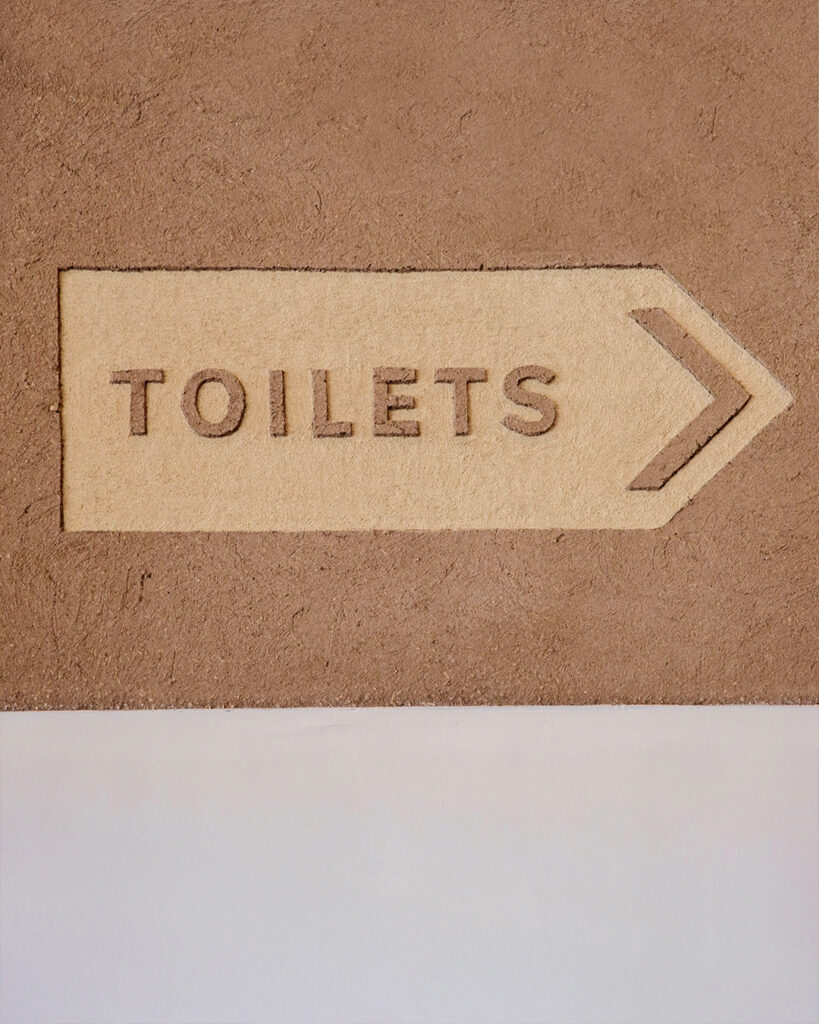
Ten years on, the project has matured as intended – planted roofs have settled into the terrain, timber has weathered gracefully and our bespoke clay plaster finishes continue to perform both materially and atmospherically. In 2016, Gloucester Services received a RIBA National Award. In 2024, it was recognised with the Architecture Today Test of Time Award, which assesses buildings only after several years of occupation, focusing on environmental, social and functional performance in use.
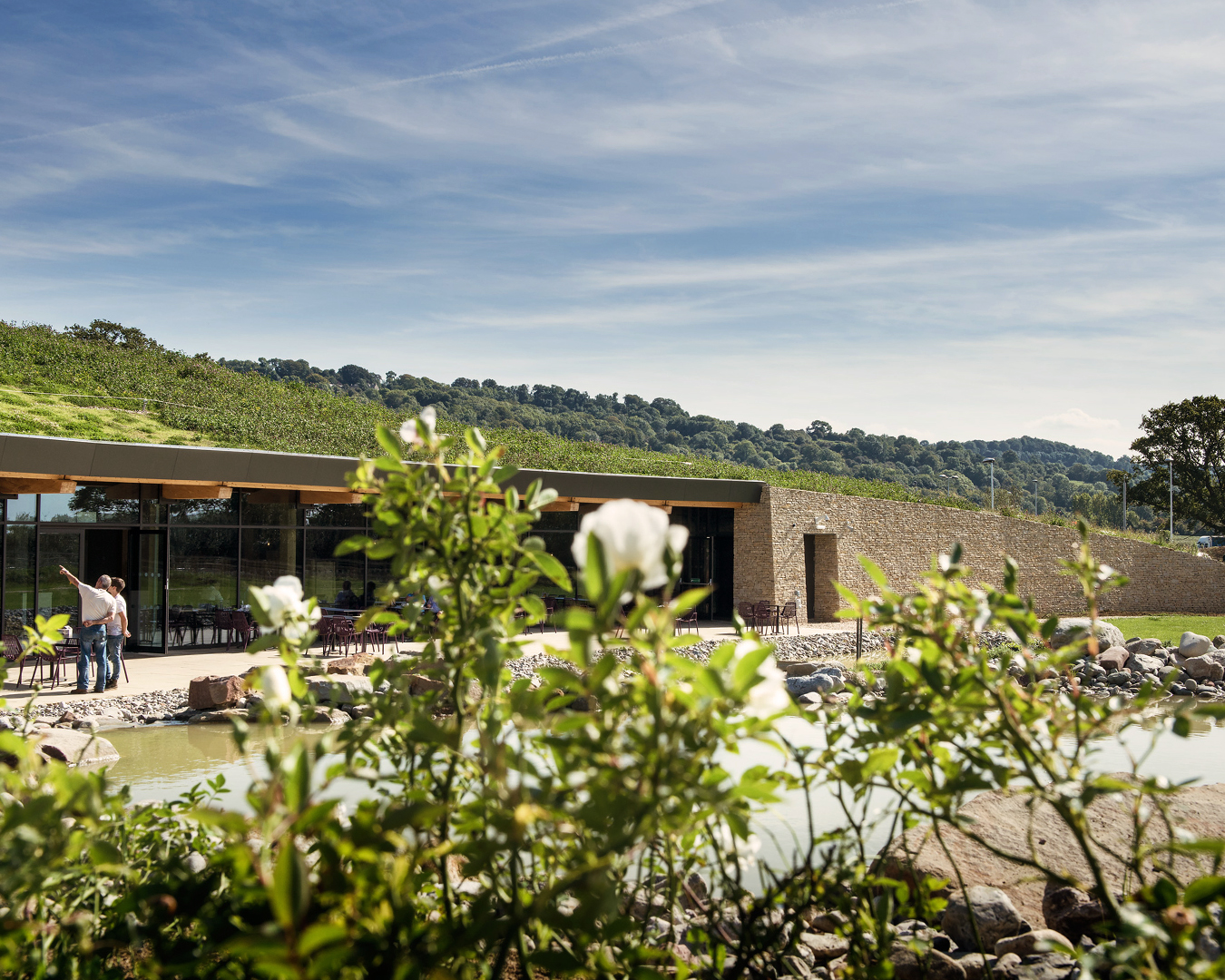
Gloucester Services, photographed in 2014, above.
Gloucester Services has become a benchmark for community-centred, sustainable infrastructure.
Here, we speak with Sarah Dunning, Chairman of Westmorland Family, the family business behind the award-winning services, about doing things differently, and why it has worked so well.
When Tebay first opened, did it feel like a radical alternative to the typical motorway service station? How did that experience influence the vision for Gloucester Services?
My parents and another local couple opened Tebay Services in 1972, over 50 years ago. I suspect there wasn’t such a set format for motorway services areas at the time. Mum and Dad were farmers and their business partners bakers and I think they just created the business as an extension of what they knew; local architecture, local materials, local products and local people. Although Gloucester Services is a very different building, the idea is the same there.
Craft and natural materials are central to Gloucester Services. Tell us about your commitment to craft – why is that an important part of the business?
Craft is a central idea in what we do – whether it relates to our food, other products we sell or our buildings. We love products which draw on our heritage and are made in traditional ways. That’s why we were so pleased to find Clayworks.
Gloucester Services received the AT Test of Time Award in 2024. How important was designing for longevity from the outset, and what do you think has enabled the project to age so well?
We think the best designs are usually timeless. We’re only 10 years old at Gloucester Services, but I think it’s ageing quite well so far.
Looking back over the past ten years, did any aspects of the project change significantly from the original vision? Has the site evolved through this time?
We are constantly learning about the business at Gloucester and honing what we do. However, all the principal components of the project have stayed true to the original vision – the building, the commitment to local craft products and our relationship with our local community through Gloucestershire Gateway Trust.
Photography by Jim Stephenson and Mark Lord.
View the Clayworks case study on Gloucester Services here.