London Design Festival always offers more than can reasonably be fitted into a few days, so this year we approached it as an opportunity to follow some of the ideas that interest us most – material, resource, craft and the relationship between them.
From a newly completed Clayworks project in Marylebone to exhibitions exploring British timber, geological resources and material reuse, a common thread emerged throughout the week – a growing interest in where materials come from, what they can do, and how architects and designers could respond more directly to the resources available to us.
Cup of Joy
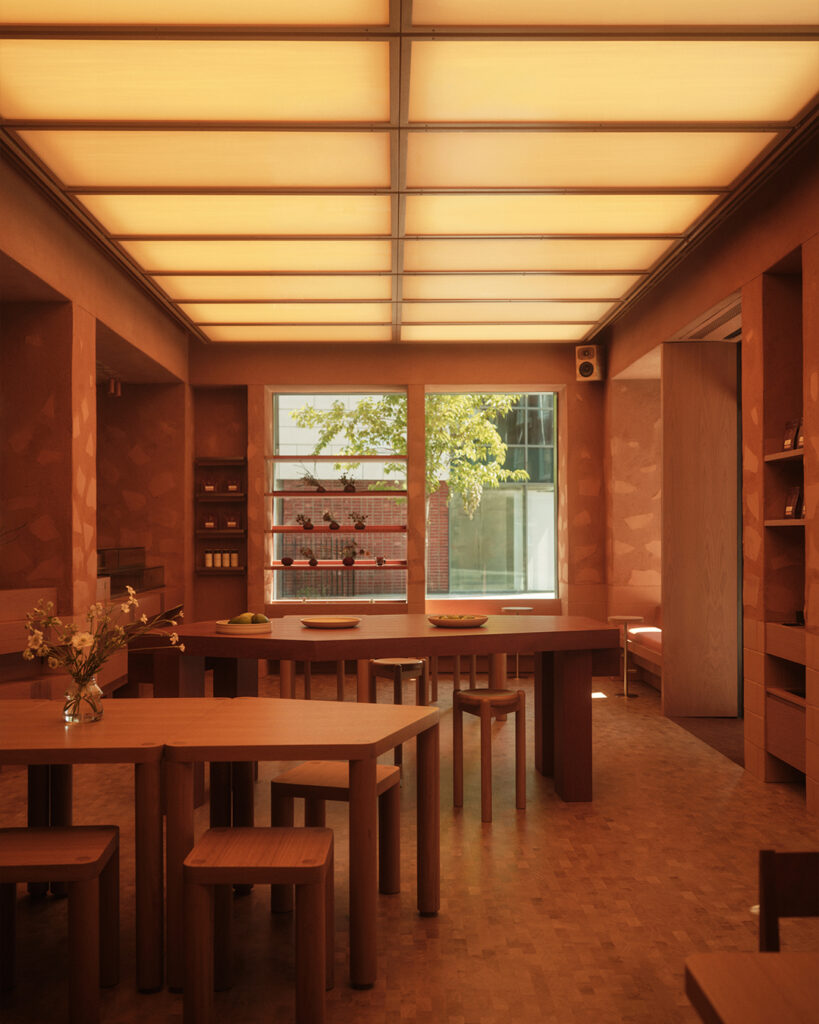
We started the week by visiting a recently completed Clayworks project, Cup of Joy, a new coffee house in Marylebone. Designed by EBBA Architects, the interior uses our Rustic clay plaster to create a series of earthy, sculptural wall elements, giving the space the feeling of an enclosed Istanbul courtyard – a reference to the city where the coffee brand originates. Clay rendered over stone gives the walls a monolithic quality, and was chosen for its ability to soften the atmosphere of the space, both visually and acoustically. The restrained palette and textural surfaces reference the materiality encountered during EBBA’s research trips to Istanbul, while allowing the clay itself to remain an important part of the interior experience.
A Multi-Material Future
Later in the week, we attended ‘A Multi-Material Future: How Designers Are Working with a Palette of Timber Species and Bio-Based Materials’, a discussion bringing together architects working on projects shortlisted for the Wood Awards. The talk asked us to consider, what does it mean to shape the design of buildings around a palette of available natural resources, with each material chosen for its particular strengths?
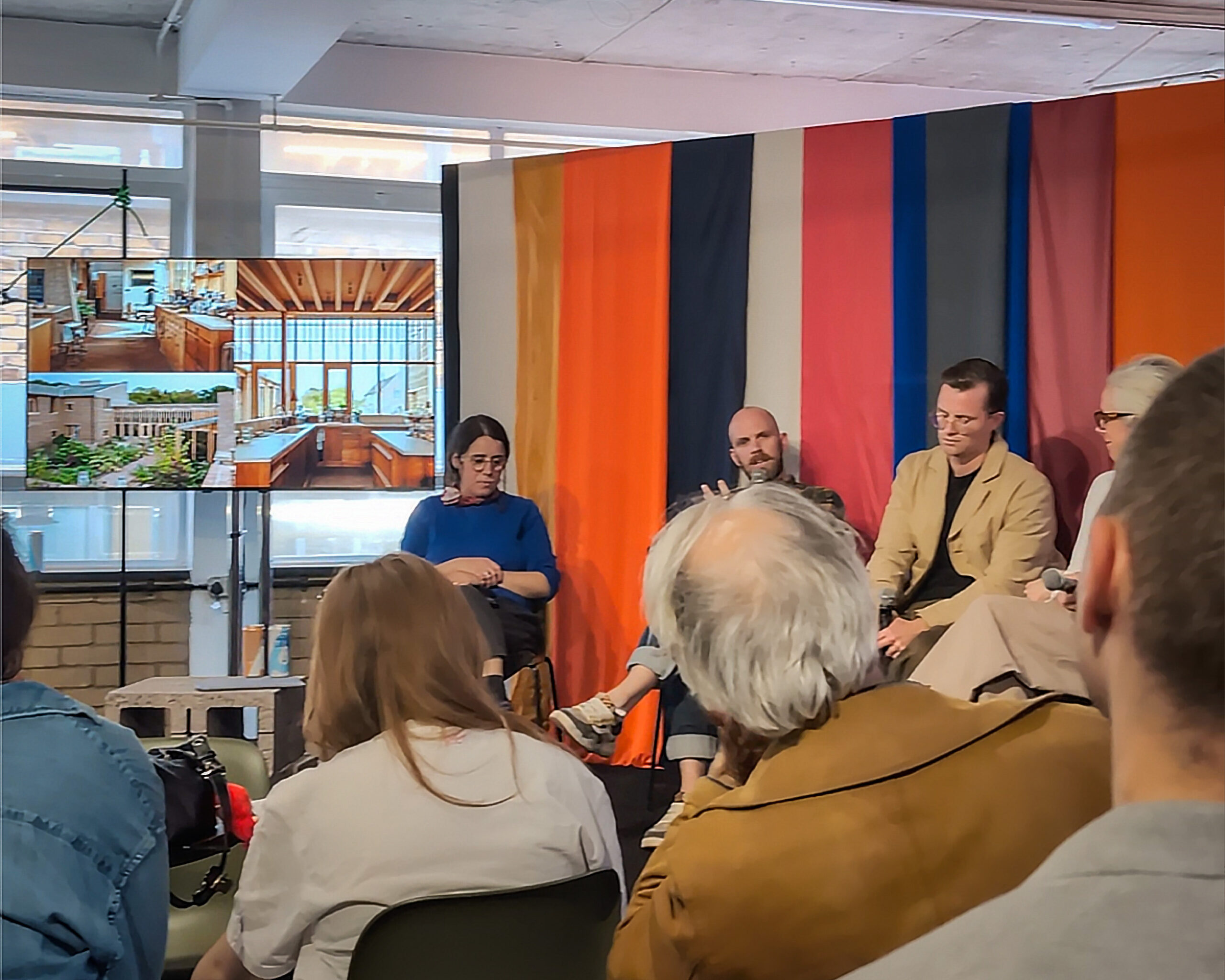
There was a strong argument for a more supply-led approach to design, where the properties, availability and limitations of materials inform the architecture from the beginning. This means understanding the particular strengths of different materials and working with their constraints rather than treating those constraints as problems to be overcome.
For us, this resonated particularly strongly when Alex Lynes of Webb Yates discussed Tuckey Design Studio’s Rammed Earth House, a project Clayworks was pleased to provide several internal clay finishes for. Alex explained how the design grew out of a process of material testing and exploration, demonstrating how experimentation with a material can become the starting point for architectural ideas rather than simply a stage in the specification process.
The discussion also touched on the untapped potential of British timber. Finbar Charleson of dRMM spoke about the UK’s reliance on imported timber despite having the conditions to grow more diverse, resilient forests here. This idea of working with what is locally available, rather than defaulting to a narrow palette of established materials, felt particularly relevant across the festival. It also led us to one of our next stops the following day…
Building from Forests
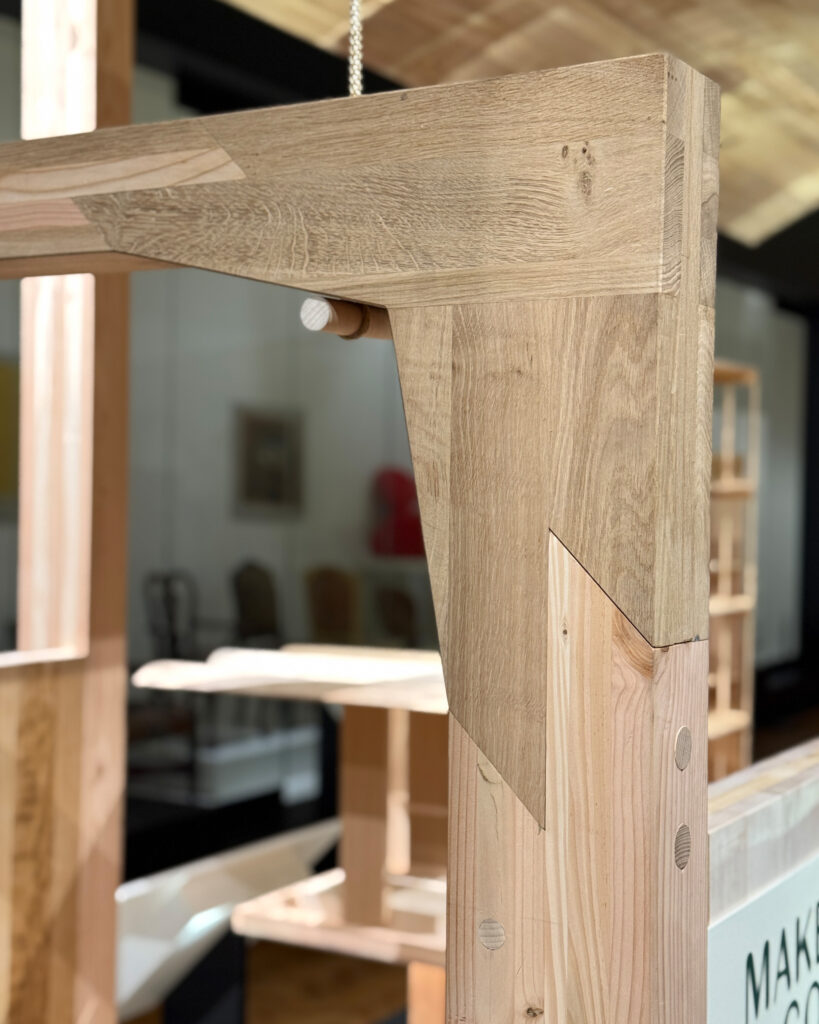
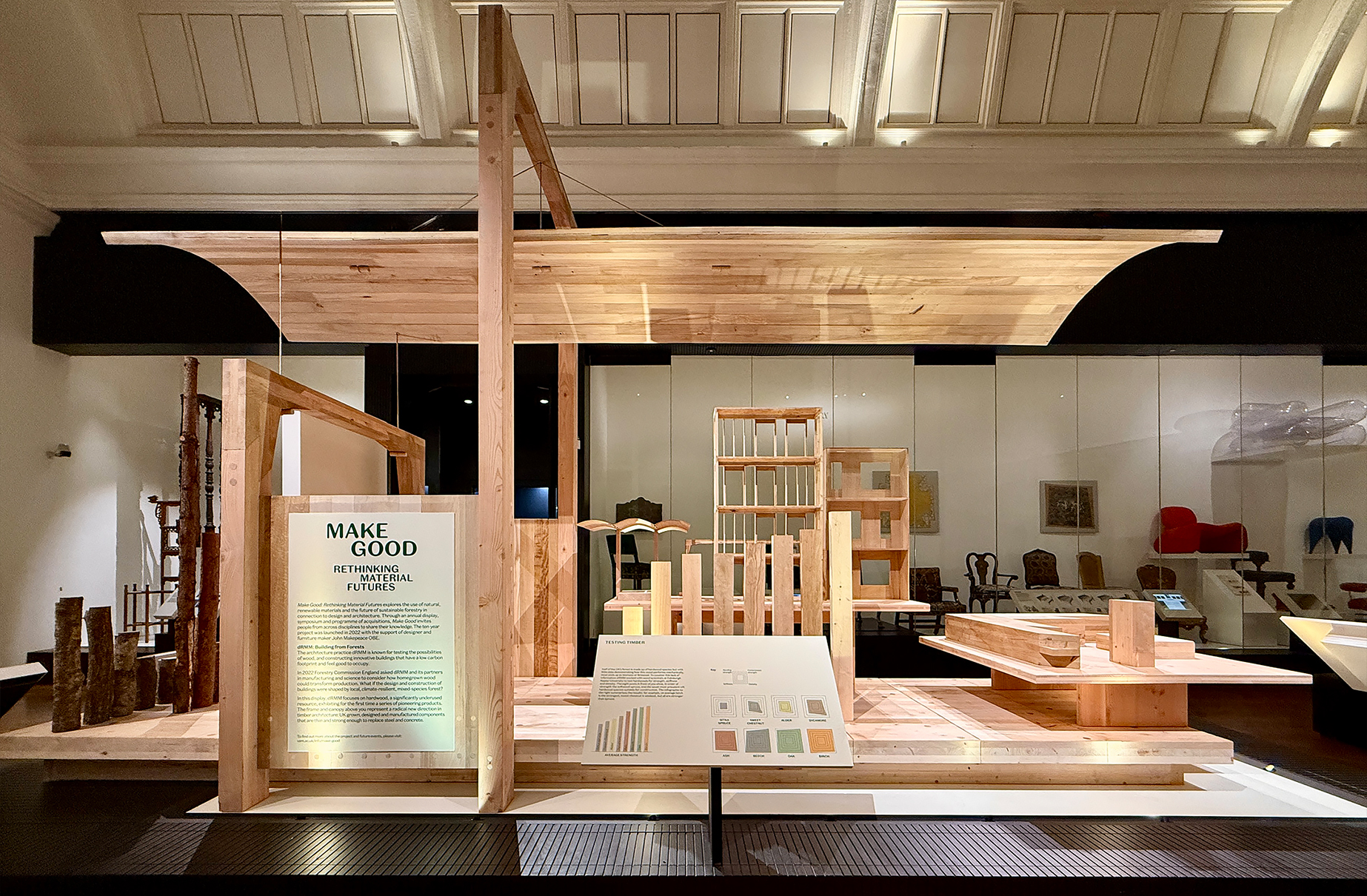
Within the V&A’s ‘Make Good: Rethinking Material Futures’ programme, dRMM’s ‘Building from Forests’ installation explores how architecture might respond to Britain’s own timber resources. The project, developed through a three-year research programme with partners in science, manufacturing and forestry, investigates the structural potential of underused UK-grown hardwoods.
The installation looks closely at the different properties of species including birch, ash, sweet chestnut and oak, and considers how they might be engineered into products such as cross-laminated timber and glulam. The resulting prototypes, material samples and structural components on show make the research tangible, showing how material knowledge can translate into new forms of construction.
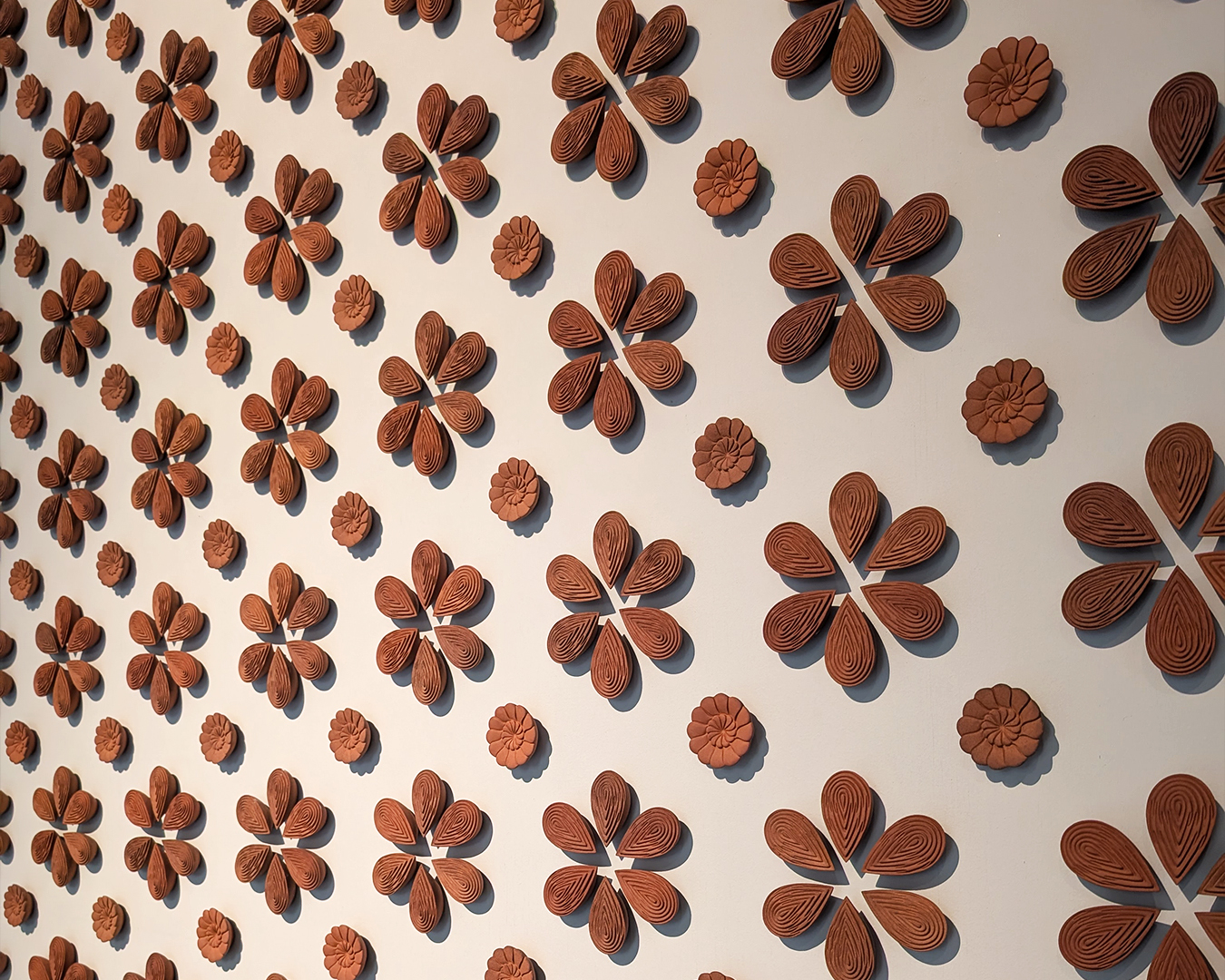
We walked through the V&A’s incredible floor-to-ceiling ceramics collection back down to the central sculpture gallery, where we found Albert Yonathan Setayawan’s ‘Metamorphic Modulation’. The installation comprises over 700 individual pieces hand-modelled in clay, slip-cast in red terracotta, and left unglazed to celebrate clay’s particular material qualities. Though part of the V&A’s LDF programme, the artwork is being displayed until 18th October 2026.
Material and Deep Time
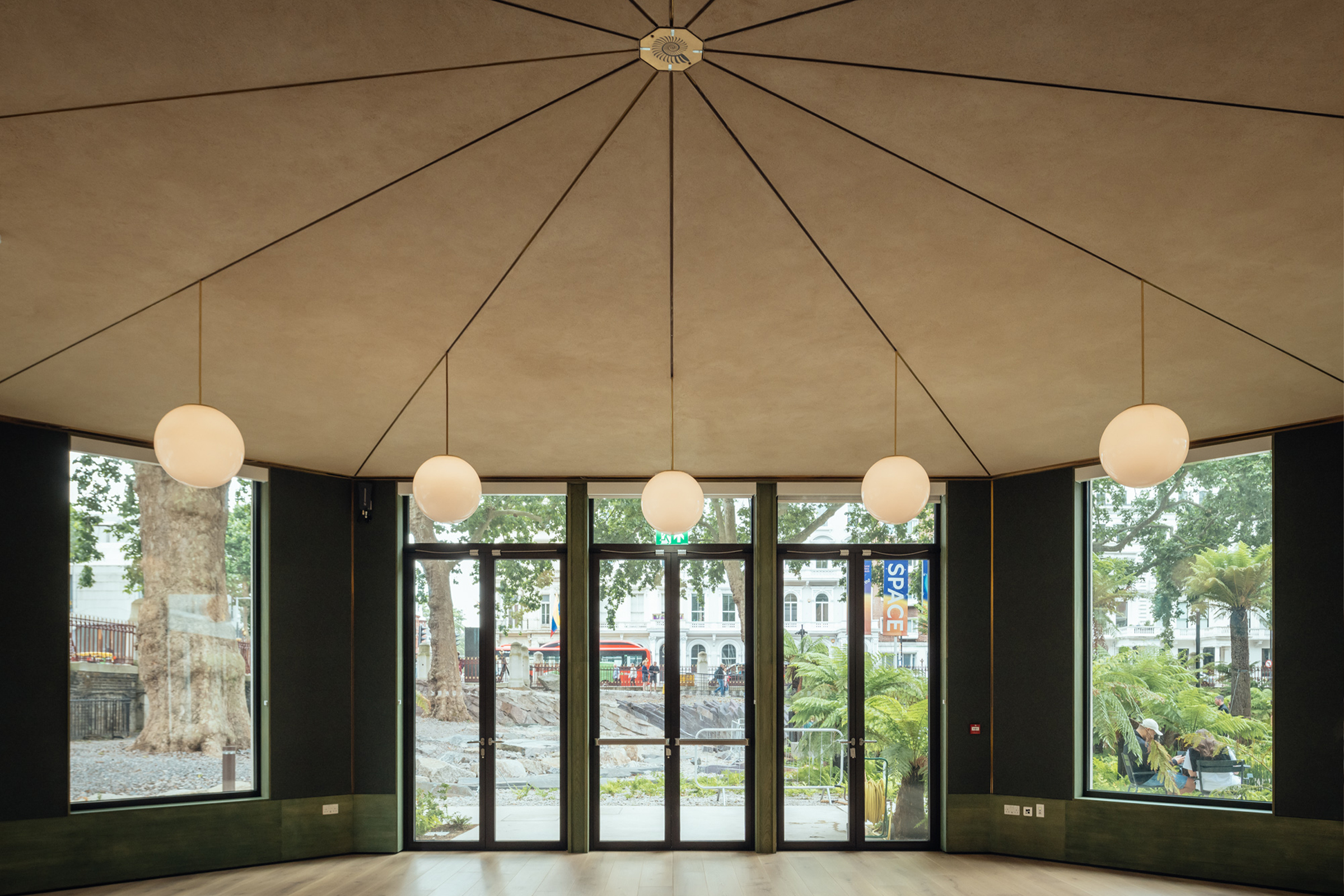
We then made a quick stop at the Natural History Museum to visit Feilden Fowles’ award-winning Urban Nature Project, the museum’s response to the pressures of urbanisation and biodiversity loss. Its octagonal Garden Room, used as an events space, features our low-carbon Rustic Arakabe clay plaster across its faceted ceiling, complementing the project’s natural material palette and wider environmental ambitions.
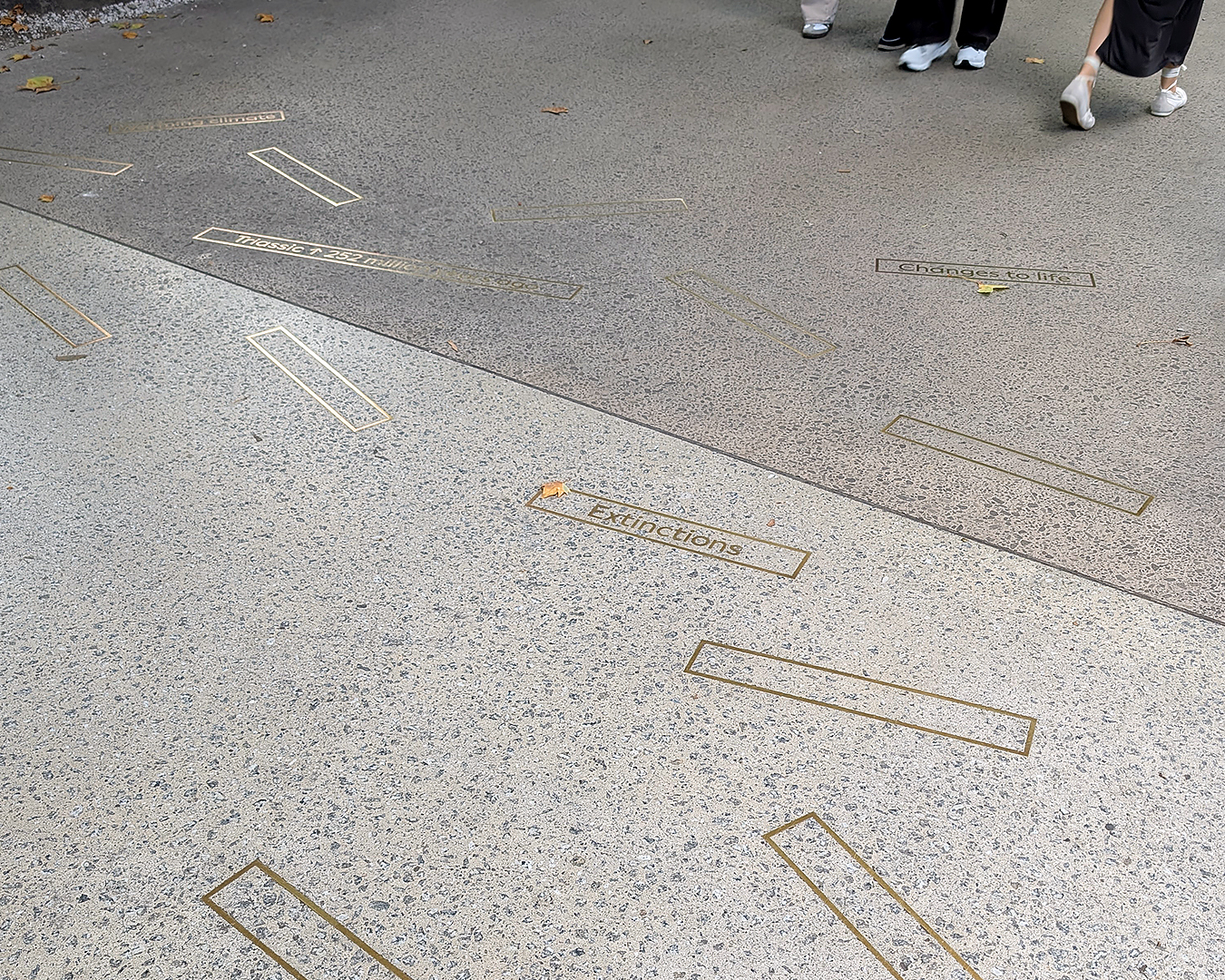
Directly outside, in the Evolution Garden, pathways are constructed of poured terrazzo, with stone aggregate changing along the route to reflect different geological periods, offering a chance to walk through geological time. Brass inlays mark fossils, geological eras and extinction events, while 26 incredible specimens of UK-quarried rock and stone dotted along the path offer a tactile understanding of these materials that shape our isles.
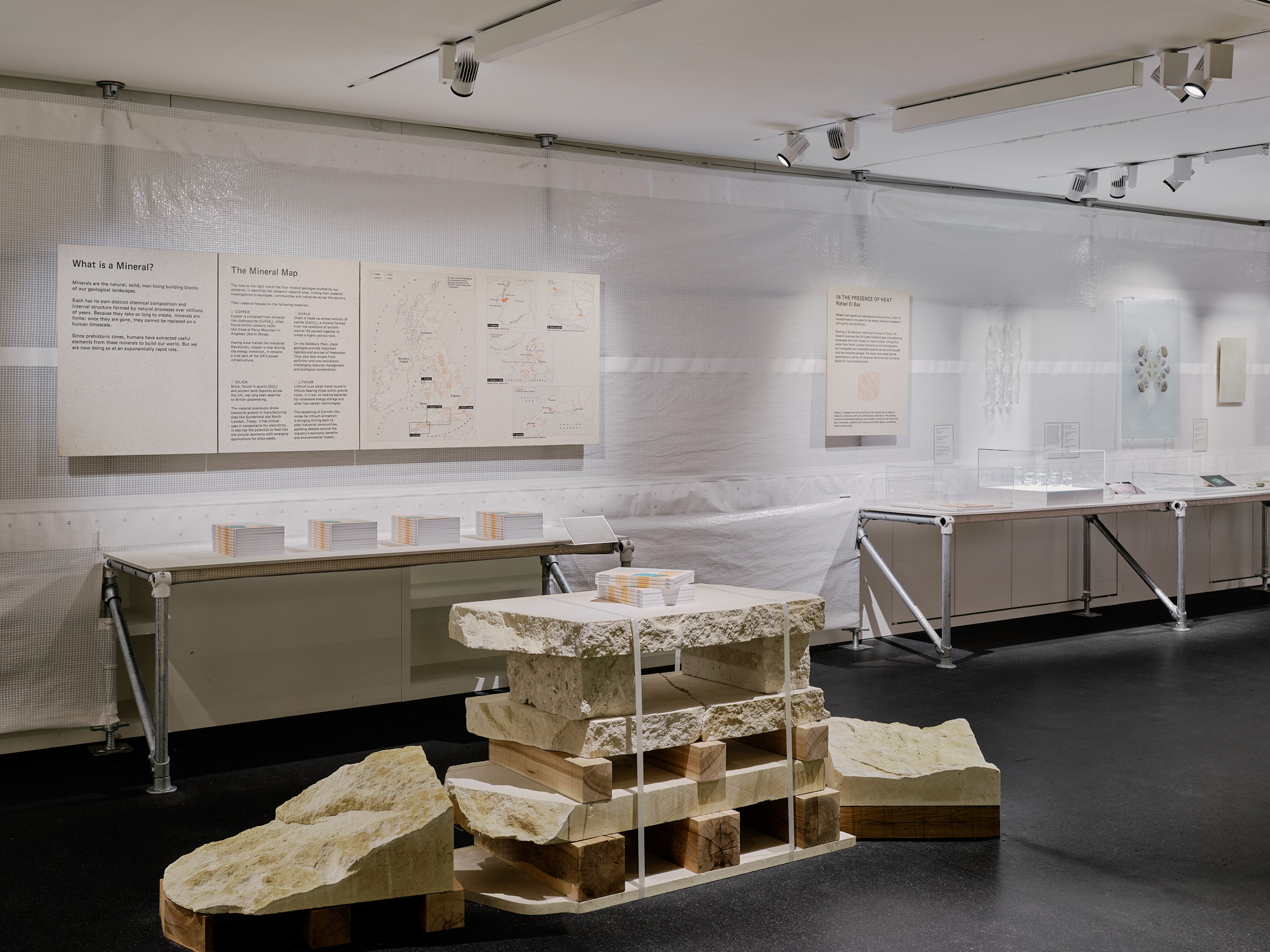
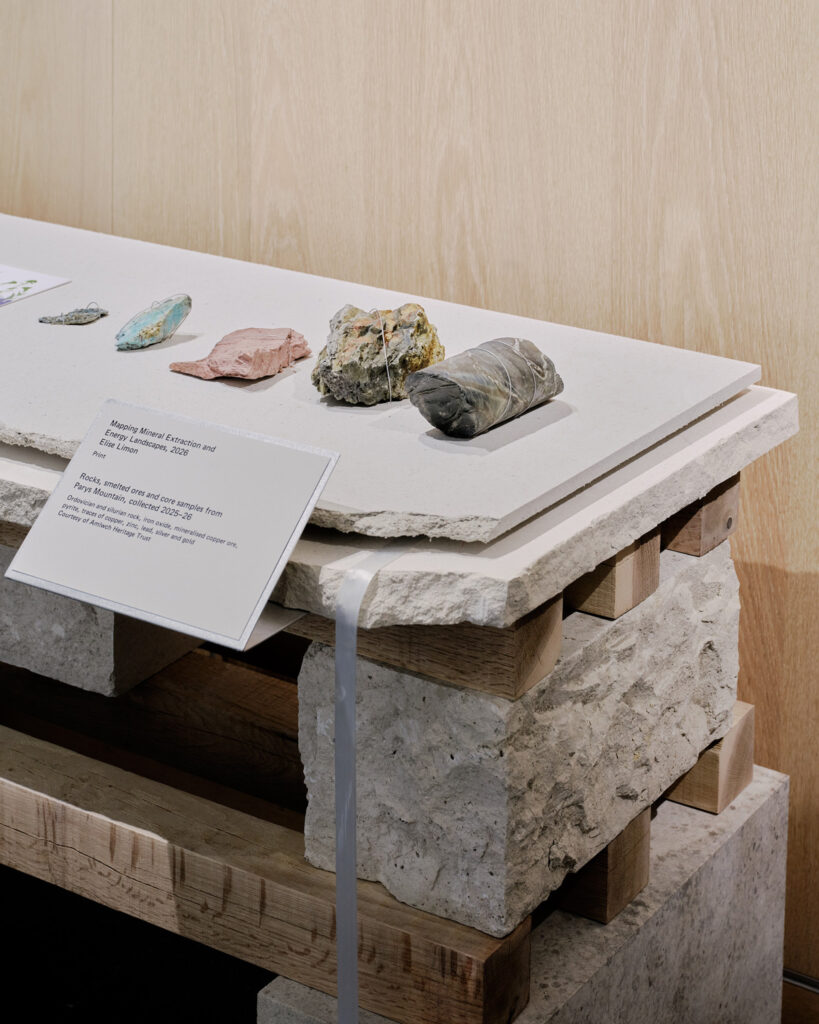
On to the Design Museum, for its ‘Design Researchers in Residence: Mineral’ exhibition, which brought together four strands of research into lithium, copper, silica and chalk, the UK’s geological, ecological and urban landscapes, and their relationship to the transition towards a low-carbon economy. Though relatively small in scale, the exhibition was abundant with creative ideas, interesting and timely research and works that moved fluidly between art, design and the communication of information.
Making Sustainability Useful
We finished our time at London Design Festival with a talk organised by the Cradle to Cradle Products Innovation Institute, focused on the sustainability information that architects and designers actually need when specifying products.
For manufacturers and makers, there is an increasingly important distinction between having sustainability credentials and making the information behind them genuinely useful. Architects and designers need to be able to understand what a product’s environmental data means, where it comes from and how it can be compared with other materials, alongside the more familiar considerations of aesthetics, performance, cost and availability.
For us, this is an important part of the ongoing work around Clayworks’ own environmental data. Our EPDs provide independently verified information about the environmental impacts of our finishes across their life cycle, giving specifiers a more robust basis for making material decisions.
Across the festival, we were excited to see how materials are being approached in new and informed ways. For us, the most interesting projects and conversations were those where materials (and particularly natural ones) were part of design thinking from the beginning. And that feels like an increasingly important place for architecture and design to start.
Photography: Felix Speller for EBBA, dRMM, Henry Woide, Jim Stephenson, Clayworks.